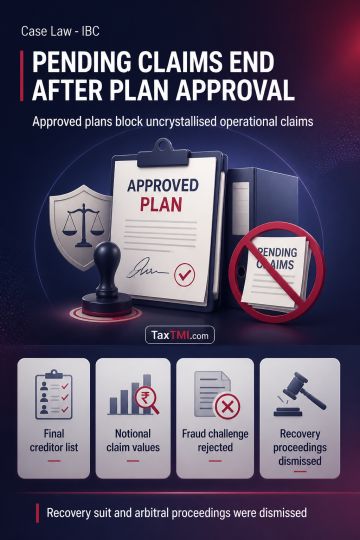
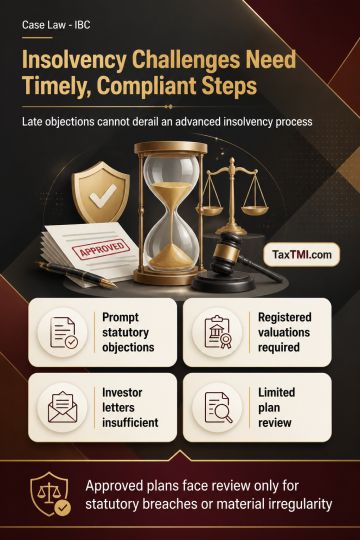
Clean slate principle extinguishes uncrystallised operational claims and bars continuation of pending recovery and arbitral proceedings after plan app...
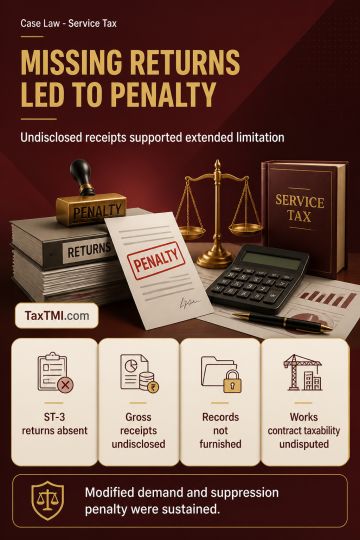
Works contract classification governs composite layout-development contracts where VAT-paid goods are transferred alongside construction and infrastru...
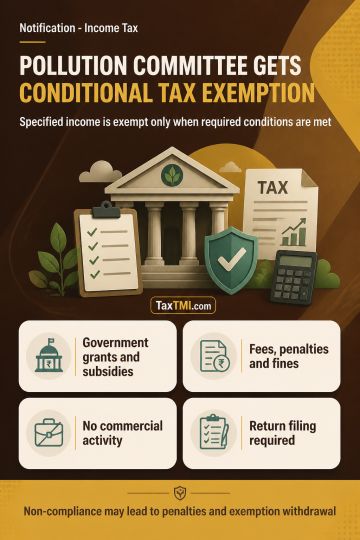
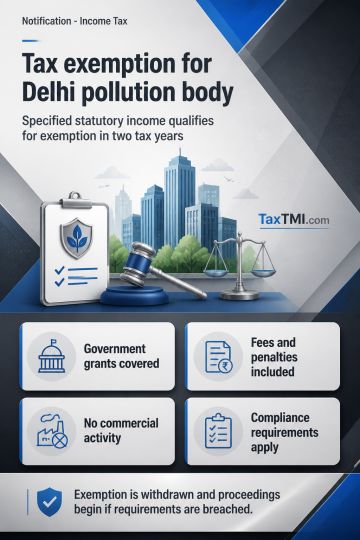
Specified income tax exemption for pollution control body remains conditional on non-commercial activity, unchanged income character, and return filin...
Jurisdictional facts in certificate-of-origin discrepancies can support customs show-cause proceedings, leaving factual explanations for departmental ...
The ITAT Jaipur addressed a case involving a revision u/s 263 concerning the addition u/s 68 based on a report from an investigation in Mumbai. The PCIT contended that the AO did not properly examine the issue of bogus LTCG, leading to the need for the LTCG claimed to be added to the assessee's total income. The tribunal emphasized that for u/s 263 to apply, the assessment order must be both erroneous and prejudicial to revenue. Mere loss of revenue due to the AO's decision does not automatically make the order prejudicial. The tribunal found no incorrectness in the AO's actions and concluded that the PCIT's order did not meet the requirements of u/s 263. The tribunal held that a change of opinion by the PCIT is not permissible under the law, ultimately allowing the assessee's appeal.
The ITAT Jaipur addressed a case involving a revision u/s 263 concerning the addition u/s 68 based on a report from an investigation in Mumbai. The PCIT contended that the AO did not properly examine the issue of bogus LTCG, leading to the need for the LTCG claimed to be added to the assessee's total income. The tribunal emphasized that for u/s 263 to apply, the assessment order must be both erroneous and prejudicial to revenue. Mere loss of revenue due to the AO's decision does not automatically make the order prejudicial. The tribunal found no incorrectness in the AO's actions and concluded that the PCIT's order did not meet the requirements of u/s 263. The tribunal held that a change of opinion by the PCIT is not permissible under the law, ultimately allowing the assessee's appeal.
Note: It is a system-generated summary and is for quick reference only.
 TaxTMI
 of 4794









 Join Channel


 TaxTMI