Customs Broker association membership becomes mandatory in the operating jurisdiction, with exclusive membership and limited compliance-time relaxatio...
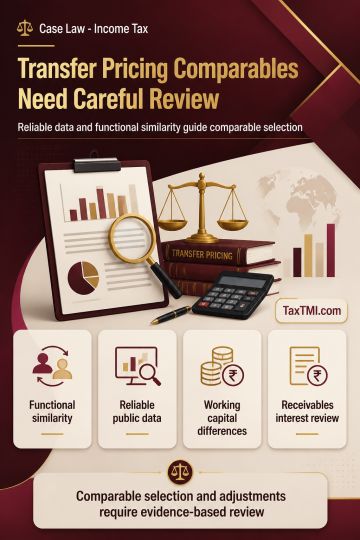
Transfer pricing comparability requires functional alignment, reliable financial data, and careful review of working capital and receivables adjustmen...
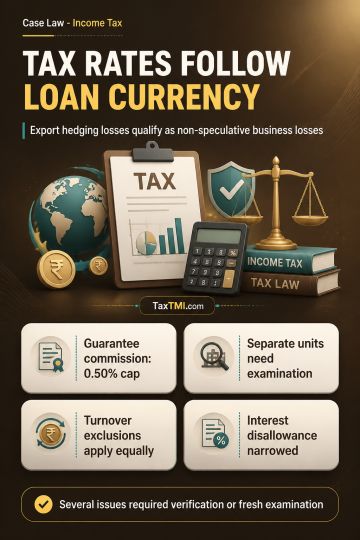
Transfer pricing rules require benchmarking corporate guarantees and associated-enterprise advances, while invalid domestic-transaction adjustments ca...
Page of 4788
Press 'Enter' after typing page number.
241 to 260 of 95749 Results
❮
❯
❯❯
0 / 200
Expand Note
Add to Folder
No Folders have been created
+
Are you sure you want to delete "My most important" ?
The Madras High Court considered the issue of personal hearing notice u/s FEMA 1999. The Court held that Rule 4(3) does not require the reasoned opinion to be communicated to the person being proceeded against. Judicial expansion of the Rule for fairness may defeat its purpose. The Court emphasized that the Adjudicating Authority must form an opinion before issuing a show cause notice. The Court referred to previous judgments and stated that providing reasons is not mandated. Writ petitions against show cause or personal hearing notices are generally not entertained u/r Article 226 unless issued by an incompetent authority or tainted with malafide. The Court concluded that Rule 4(3) does not require further procedures beyond forming an opinion, and the petitioner should participate in proceedings as per the Act and Rules.
The Madras High Court considered the issue of personal hearing notice u/s FEMA 1999. The Court held that Rule 4(3) does not require the reasoned opinion to be communicated to the person being proceeded against. Judicial expansion of the Rule for fairness may defeat its purpose. The Court emphasized that the Adjudicating Authority must form an opinion before issuing a show cause notice. The Court referred to previous judgments and stated that providing reasons is not mandated. Writ petitions against show cause or personal hearing notices are generally not entertained u/r Article 226 unless issued by an incompetent authority or tainted with malafide. The Court concluded that Rule 4(3) does not require further procedures beyond forming an opinion, and the petitioner should participate in proceedings as per the Act and Rules.
Note: It is a system-generated summary and is for quick reference only.
 TaxTMI
 of 4788






 Join Channel


 TaxTMI