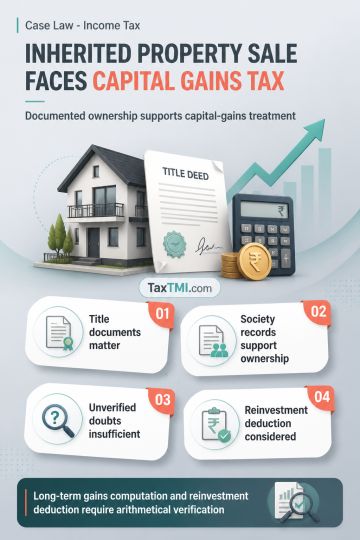
Inherited property sale proceeds require capital-gains treatment where ownership is supported by evidence, not suspicion or unverified signature doubt...
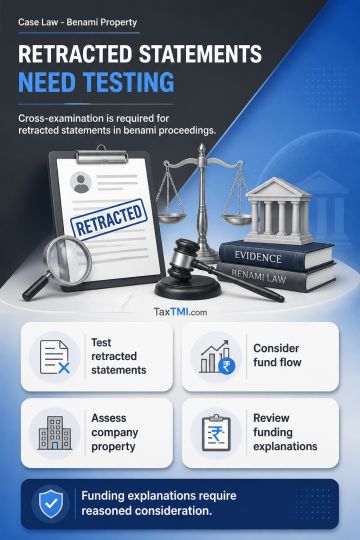
Cross-examination of retracted statements is essential where foundational evidence supports a benami allegation and documented funding explanations re...
Capital-goods exemption covers plant-modernisation accessories, while the import restriction applies only to earlier capital-goods components and spar...
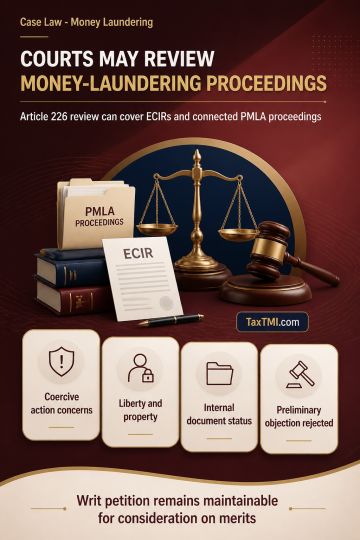
Constitutional judicial review permits challenges to ECIRs and connected money-laundering proceedings where coercive action affects fundamental intere...
The Delhi High Court examined the validity of reassessment proceedings u/s 147 after a four-year lapse. The court emphasized the requirement of "reasons to believe" for reopening assessments. It noted that the AO lacked specific grounds for reassessment, resembling past cases. The CIT(A) upheld reassessment based on a revenue audit report, but failed to establish a direct link between reasons and belief u/s 147. The court found the initiation of reassessment after four years without fresh material as legally unsound, rejecting the Revenue's case. The decision favored the assessee, emphasizing the need for concrete grounds for reassessment within the statutory period.
The Delhi High Court examined the validity of reassessment proceedings u/s 147 after a four-year lapse. The court emphasized the requirement of "reasons to believe" for reopening assessments. It noted that the AO lacked specific grounds for reassessment, resembling past cases. The CIT(A) upheld reassessment based on a revenue audit report, but failed to establish a direct link between reasons and belief u/s 147. The court found the initiation of reassessment after four years without fresh material as legally unsound, rejecting the Revenue's case. The decision favored the assessee, emphasizing the need for concrete grounds for reassessment within the statutory period.
Note: It is a system-generated summary and is for quick reference only.
 TaxTMI
 of 4786







 Join Channel


 TaxTMI