International transaction benchmarking restricts transfer pricing adjustments to associated-enterprise dealings, while functional comparability govern...
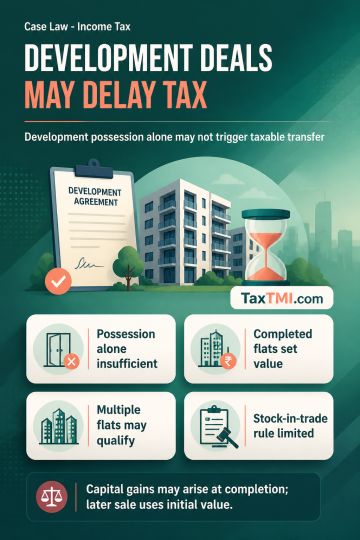
Joint development agreements defer taxable transfer where possession lacks part performance, while completed flats determine consideration and exempti...
Passenger baggage re-export requires true declaration and cannot be granted indirectly through discretionary redemption of undeclared prohibited goods...
In the ITAT Delhi case, the issue revolved around claiming exemption u/s 54F for investment in a residential house. The CIT(A) allowed the exemption based on the purchase of a property referred to as "Makan." However, investigations revealed the investment was in urban agricultural land used for a concrete brick manufacturing unit, not a residential house. The stamp duty and lease deed also indicated non-residential use. The tribunal emphasized the requirement of reinvesting in a new residential property for u/s 54F exemption, aiming to promote home ownership and economic growth. As no proof of a residential house was established, the claim was denied, holding the land with a shed as non-residential. The decision favored the revenue authorities.
In the ITAT Delhi case, the issue revolved around claiming exemption u/s 54F for investment in a residential house. The CIT(A) allowed the exemption based on the purchase of a property referred to as "Makan." However, investigations revealed the investment was in urban agricultural land used for a concrete brick manufacturing unit, not a residential house. The stamp duty and lease deed also indicated non-residential use. The tribunal emphasized the requirement of reinvesting in a new residential property for u/s 54F exemption, aiming to promote home ownership and economic growth. As no proof of a residential house was established, the claim was denied, holding the land with a shed as non-residential. The decision favored the revenue authorities.
Note: It is a system-generated summary and is for quick reference only.
 TaxTMI
 of 4782
















 Join Channel


 TaxTMI
