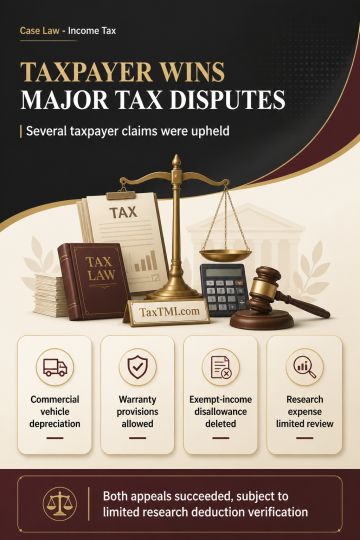
Commercial vehicle depreciation, scientifically determined warranty provisions and exempt-income disallowances were resolved in favour of the taxpayer...
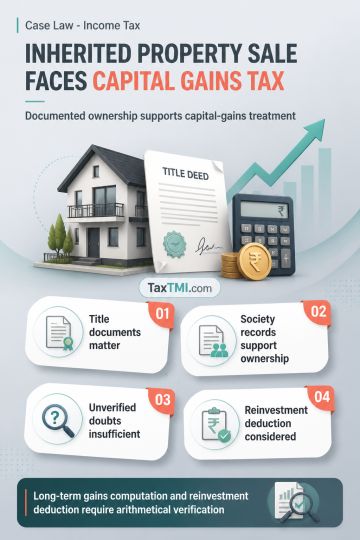
Inherited property sale proceeds require capital-gains treatment where ownership is supported by evidence, not suspicion or unverified signature doubt...
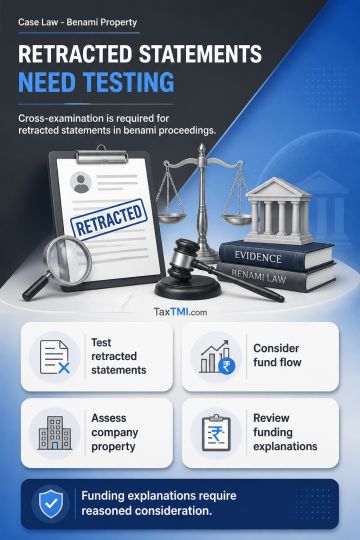
Cross-examination of retracted statements is essential where foundational evidence supports a benami allegation and documented funding explanations re...
Capital-goods exemption covers plant-modernisation accessories, while the import restriction applies only to earlier capital-goods components and spar...
Constitutional judicial review permits challenges to ECIRs and connected money-laundering proceedings where coercive action affects fundamental intere...
In the ITAT Delhi case, the issue revolved around claiming exemption u/s 54F for investment in a residential house. The CIT(A) allowed the exemption based on the purchase of a property referred to as "Makan." However, investigations revealed the investment was in urban agricultural land used for a concrete brick manufacturing unit, not a residential house. The stamp duty and lease deed also indicated non-residential use. The tribunal emphasized the requirement of reinvesting in a new residential property for u/s 54F exemption, aiming to promote home ownership and economic growth. As no proof of a residential house was established, the claim was denied, holding the land with a shed as non-residential. The decision favored the revenue authorities.
In the ITAT Delhi case, the issue revolved around claiming exemption u/s 54F for investment in a residential house. The CIT(A) allowed the exemption based on the purchase of a property referred to as "Makan." However, investigations revealed the investment was in urban agricultural land used for a concrete brick manufacturing unit, not a residential house. The stamp duty and lease deed also indicated non-residential use. The tribunal emphasized the requirement of reinvesting in a new residential property for u/s 54F exemption, aiming to promote home ownership and economic growth. As no proof of a residential house was established, the claim was denied, holding the land with a shed as non-residential. The decision favored the revenue authorities.
Note: It is a system-generated summary and is for quick reference only.
 TaxTMI
 of 4782












 Join Channel


 TaxTMI
