Authentication of paper assessment orders upheld, while qualifying repairs, consumables and vendor advance write-offs remain deductible business claim...
Transaction value cannot be rejected solely on non-statutory valuation guidelines without corroborative evidence supporting reassessment of final cust...
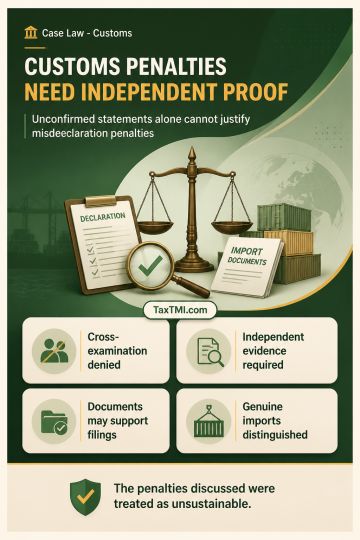
Cross-examination rights and corroborated evidence limit customs penalties for misdeclaration in genuine import transactions involving documented clea...
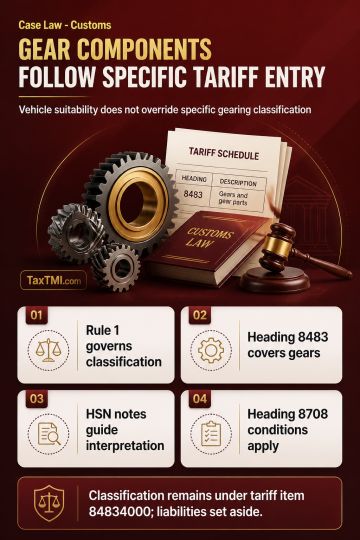
Tariff classification of vehicle gear components follows the specific gearing entry, displacing motor-vehicle parts classification and related liabili...
Necessary-party requirements limit impleadment of independent entities, while deferred consideration does not create an appealable adverse determinati...
Page of 4788
Press 'Enter' after typing page number.
421 to 440 of 95749 Results
❮
❯
❯❯
0 / 200
Expand Note
Add to Folder
No Folders have been created
+
Are you sure you want to delete "My most important" ?
In the ITAT Delhi case, the issue revolved around claiming exemption u/s 54F for investment in a residential house. The CIT(A) allowed the exemption based on the purchase of a property referred to as "Makan." However, investigations revealed the investment was in urban agricultural land used for a concrete brick manufacturing unit, not a residential house. The stamp duty and lease deed also indicated non-residential use. The tribunal emphasized the requirement of reinvesting in a new residential property for u/s 54F exemption, aiming to promote home ownership and economic growth. As no proof of a residential house was established, the claim was denied, holding the land with a shed as non-residential. The decision favored the revenue authorities.
In the ITAT Delhi case, the issue revolved around claiming exemption u/s 54F for investment in a residential house. The CIT(A) allowed the exemption based on the purchase of a property referred to as "Makan." However, investigations revealed the investment was in urban agricultural land used for a concrete brick manufacturing unit, not a residential house. The stamp duty and lease deed also indicated non-residential use. The tribunal emphasized the requirement of reinvesting in a new residential property for u/s 54F exemption, aiming to promote home ownership and economic growth. As no proof of a residential house was established, the claim was denied, holding the land with a shed as non-residential. The decision favored the revenue authorities.
Note: It is a system-generated summary and is for quick reference only.
 TaxTMI
 of 4788



















 Join Channel


 TaxTMI

