Clean slate principle extinguishes uncrystallised operational claims and bars continuation of pending recovery and arbitral proceedings after plan app...
Works contract classification governs composite layout-development contracts where VAT-paid goods are transferred alongside construction and infrastru...
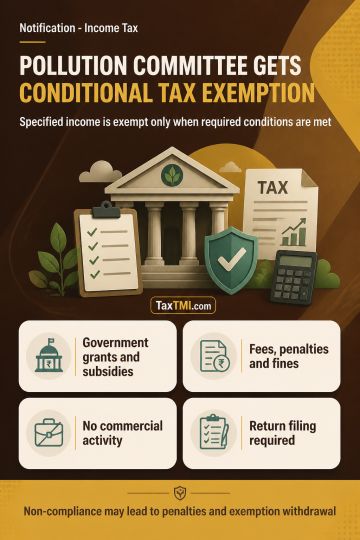
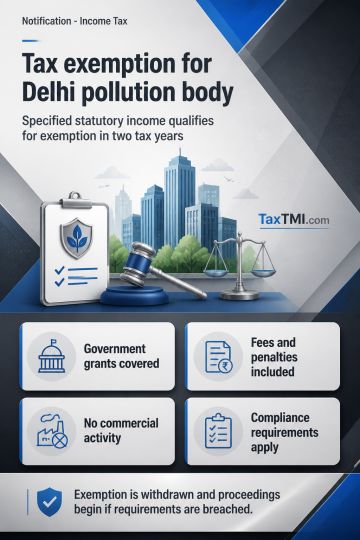
Specified income tax exemption for pollution control body remains conditional on non-commercial activity, unchanged income character, and return filin...
The ITAT Surat held that the penalty u/s 271(1)(c) was not sustainable due to a defective notice and estimation of income on bogus purchases. The notice u/s 274 was issued mechanically without specifying whether the penalty was for 'Concealment of income' or 'furnishing inaccurate particulars of income'. The additions were based on estimation without a definite finding on the quantum of concealment, rendering the penalty unsustainable. Legal precedent from the jurisdictional High Court supported this decision, citing cases such as CIT vs. Subhas Trading Co., Navjivan Oil Mills, and Valimkbhai H. Patel. Therefore, the penalty u/s 271(1)(c) was deemed not sustainable in this case.
The ITAT Surat held that the penalty u/s 271(1)(c) was not sustainable due to a defective notice and estimation of income on bogus purchases. The notice u/s 274 was issued mechanically without specifying whether the penalty was for 'Concealment of income' or 'furnishing inaccurate particulars of income'. The additions were based on estimation without a definite finding on the quantum of concealment, rendering the penalty unsustainable. Legal precedent from the jurisdictional High Court supported this decision, citing cases such as CIT vs. Subhas Trading Co., Navjivan Oil Mills, and Valimkbhai H. Patel. Therefore, the penalty u/s 271(1)(c) was deemed not sustainable in this case.
Note: It is a system-generated summary and is for quick reference only.
 TaxTMI
 of 4805

















 Join Channel


 TaxTMI