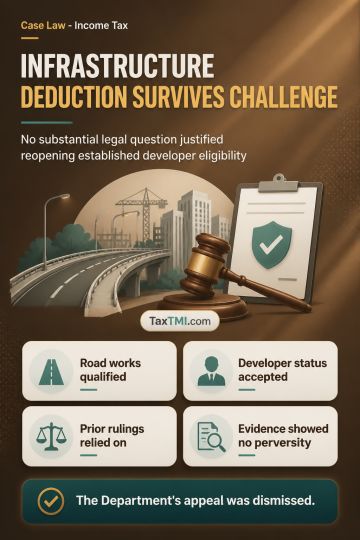
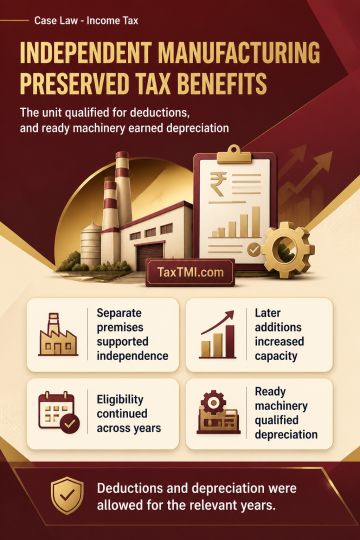
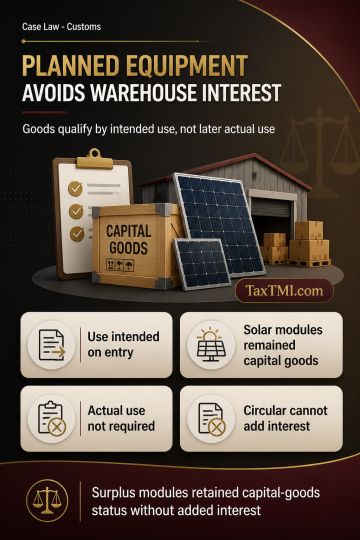
Independent manufacturing undertaking eligibility preserves Section 80IA/80IB deductions, while machinery kept ready for use qualifies for depreciatio...
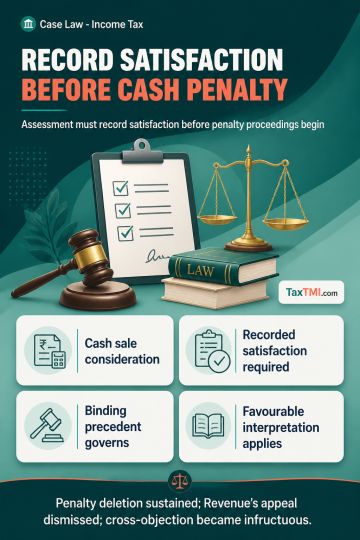
Assessing Officer Satisfaction Requirement Bars Penalty for Cash Receipt in Immovable-Property Sale Cases Where Initiation Lacks Recorded Satisfaction...
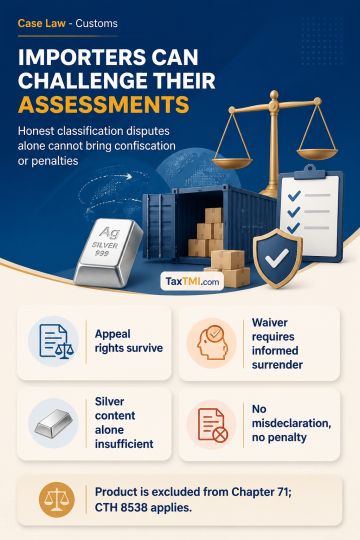
Self-assessed import entries remain appealable, while bona fide classification disputes without misdeclaration cannot justify confiscation or penaltie...
Page of 4894
Press 'Enter' after typing page number.
641 to 660 of 97867 Results
❮
❯
❯❯
0 / 200
Expand Note
Add to Folder
No Folders have been created
+
Are you sure you want to delete "My most important" ?
The Authority for Advance Ruling determined that the applicant qualifies as an Electronic Commerce Operator (ECO) as per the definitions provided. The applicant owns and manages the digital platform "Vyavshay" for service supply, connecting service providers with users. Section 9(5) of the CGST Act, 2017 applies to services offered through the platform, shifting tax liability to the ECO. The ECO is deemed the supplier of services received by consumers through the platform. The ECO is required to pay tax on transactions facilitated through the platform, regardless of payment flow. The ECO is liable for GST on app usage charges and transaction values for notified services. The ECO is responsible for tax on transactions with partners, excluding those not covered by Section 9(5) of the CGST Act, 2017.
The Authority for Advance Ruling determined that the applicant qualifies as an Electronic Commerce Operator (ECO) as per the definitions provided. The applicant owns and manages the digital platform "Vyavshay" for service supply, connecting service providers with users. Section 9(5) of the CGST Act, 2017 applies to services offered through the platform, shifting tax liability to the ECO. The ECO is deemed the supplier of services received by consumers through the platform. The ECO is required to pay tax on transactions facilitated through the platform, regardless of payment flow. The ECO is liable for GST on app usage charges and transaction values for notified services. The ECO is responsible for tax on transactions with partners, excluding those not covered by Section 9(5) of the CGST Act, 2017.
Note: It is a system-generated summary and is for quick reference only.
 TaxTMI
  TaxTMI
 of 4894