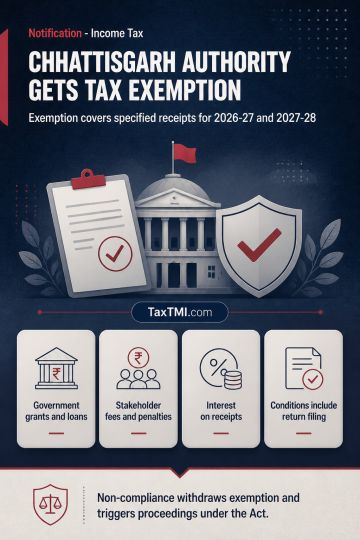
Specified regulatory authority income receives conditional tax exemption, subject to non-commercial activity, unchanged income character, and return f...
Tax exemption for regulatory authority income applies retrospectively, subject to non-commercial activity, unchanged income sources, and return-filing...
Input tax credit conditions remain constitutionally valid, with eligible recipient claims considered under GST circulars and retrospective filing dead...
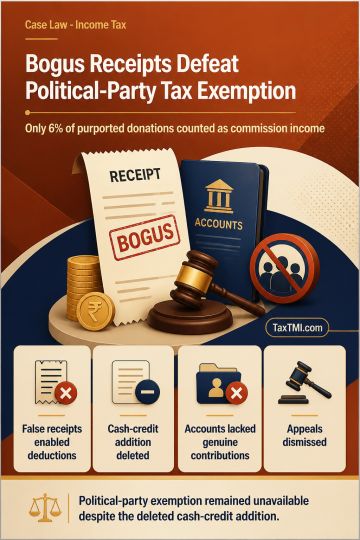
Bogus donation receipts justified commission income assessment and defeated political-party tax exemption for inaccurate accounts and reporting failur...
Pure reimbursement without income element escapes tax withholding, while delayed withholding and unsupported provisions face deferred or renewed scrut...
Public benefit requirement defeats charitable registration where residents' association services are reciprocal, member-only facilities governed by mu...
The Punjab and Haryana High Court considered a petition seeking anticipatory bail in a money laundering case involving scheduled offences. The court analyzed the applicability of Section 45 of the PMLA in anticipatory bail and the legality of the ECIR. Referring to a Supreme Court judgment, the court emphasized that bail in economic offences must be granted sparingly due to their impact on society. It noted that the prosecution need not prove the charges beyond reasonable doubt for bail, but must establish a genuine case based on reasonable material. The court found that the petitioner did not meet the criteria for anticipatory bail under Section 45 of the PMLA and dismissed the petition. Additionally, the court validated the legality of the ECIR based on the registration of FIRs and highlighted that a person can be tried under the PMLA even if not directly accused in the predicate offence.
The Punjab and Haryana High Court considered a petition seeking anticipatory bail in a money laundering case involving scheduled offences. The court analyzed the applicability of Section 45 of the PMLA in anticipatory bail and the legality of the ECIR. Referring to a Supreme Court judgment, the court emphasized that bail in economic offences must be granted sparingly due to their impact on society. It noted that the prosecution need not prove the charges beyond reasonable doubt for bail, but must establish a genuine case based on reasonable material. The court found that the petitioner did not meet the criteria for anticipatory bail under Section 45 of the PMLA and dismissed the petition. Additionally, the court validated the legality of the ECIR based on the registration of FIRs and highlighted that a person can be tried under the PMLA even if not directly accused in the predicate offence.
Note: It is a system-generated summary and is for quick reference only.
 TaxTMI
 of 4801


















 Join Channel


 TaxTMI
