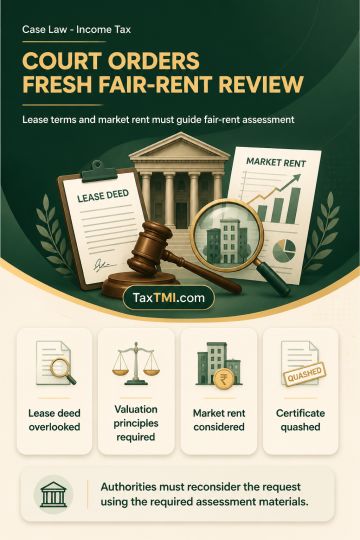
Fair-rent assessment requires consideration of lease terms, valuation principles and prevailing market rent; the certificate was quashed for fresh rev...
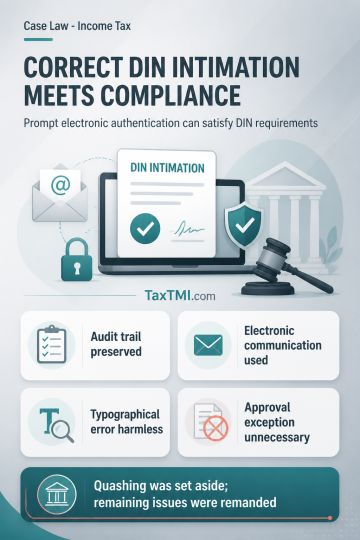
Document Identification Number compliance is satisfied when electronically communicated orders are promptly authenticated through a correctly identifi...
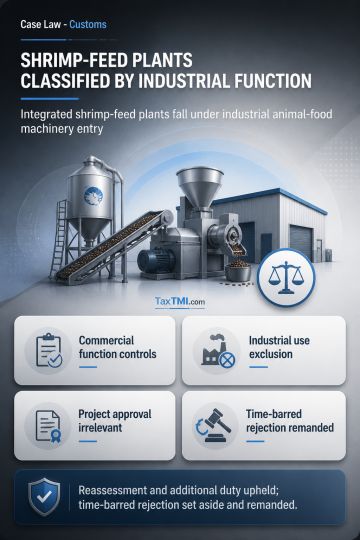
Industrial shrimp-feed machinery classification follows its commercial function, placing integrated production plants under the specific industrial fo...
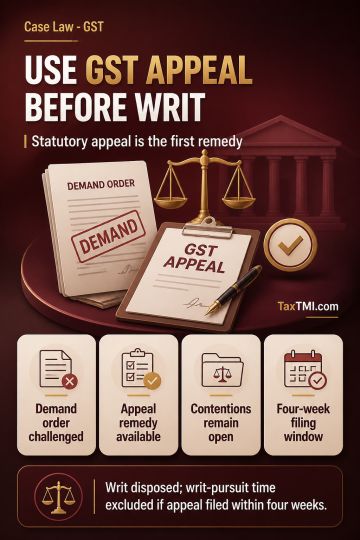
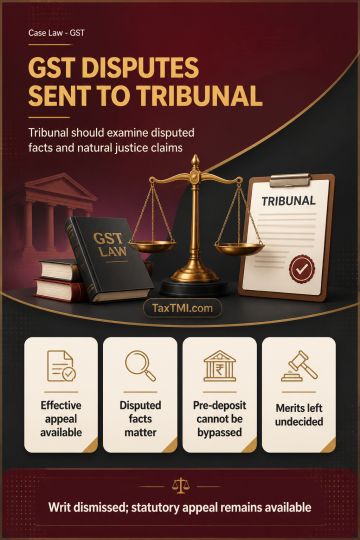
The Chhattisgarh High Court considered the maintainability of a petition challenging an order issued u/s 73(1) of the GST Act. The court noted that the order was appealable u/s 107 of the GST Act. Referring to the principle of exhaustion of alternative remedy, the court cited the Supreme Court's stance that when statutory remedies are available, writ petitions should not be entertained. The court emphasized that the petitioner had the option to challenge the order through an appeal, and dismissed the writ petition, stating that the petitioner's ability to access their email could be addressed in the appellate process. The court concluded that there were no grounds to entertain the writ petition, hence it was dismissed.
The Chhattisgarh High Court considered the maintainability of a petition challenging an order issued u/s 73(1) of the GST Act. The court noted that the order was appealable u/s 107 of the GST Act. Referring to the principle of exhaustion of alternative remedy, the court cited the Supreme Court's stance that when statutory remedies are available, writ petitions should not be entertained. The court emphasized that the petitioner had the option to challenge the order through an appeal, and dismissed the writ petition, stating that the petitioner's ability to access their email could be addressed in the appellate process. The court concluded that there were no grounds to entertain the writ petition, hence it was dismissed.
Note: It is a system-generated summary and is for quick reference only.
 TaxTMI
 of 4807



 Join Channel


 TaxTMI
