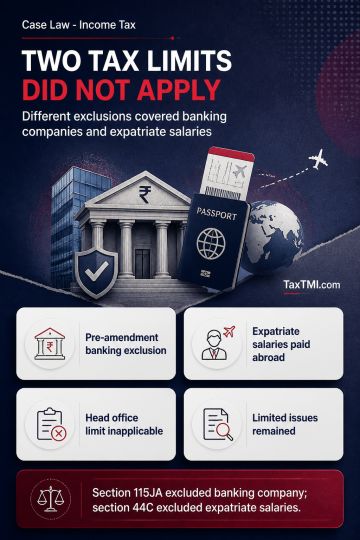
Minimum alternate tax exclusions for pre-amendment banking companies and expatriate Indian branch salaries remain outside head office expenditure limi...
Page of 4805
Press 'Enter' after typing page number.
1201 to 1220 of 96100 Results
❮
❯
❯❯
0 / 200
Expand Note
Add to Folder
No Folders have been created
+
Are you sure you want to delete "My most important" ?
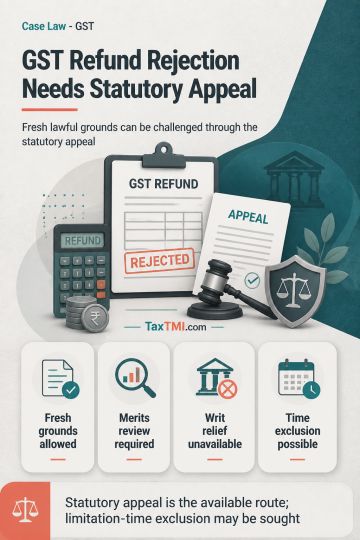
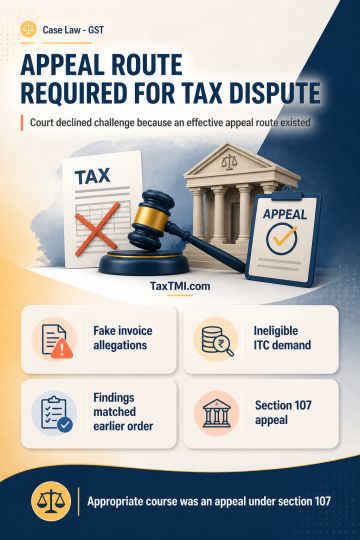
The Chhattisgarh High Court considered the maintainability of a petition challenging an order issued u/s 73(1) of the GST Act. The court noted that the order was appealable u/s 107 of the GST Act. Referring to the principle of exhaustion of alternative remedy, the court cited the Supreme Court's stance that when statutory remedies are available, writ petitions should not be entertained. The court emphasized that the petitioner had the option to challenge the order through an appeal, and dismissed the writ petition, stating that the petitioner's ability to access their email could be addressed in the appellate process. The court concluded that there were no grounds to entertain the writ petition, hence it was dismissed.
The Chhattisgarh High Court considered the maintainability of a petition challenging an order issued u/s 73(1) of the GST Act. The court noted that the order was appealable u/s 107 of the GST Act. Referring to the principle of exhaustion of alternative remedy, the court cited the Supreme Court's stance that when statutory remedies are available, writ petitions should not be entertained. The court emphasized that the petitioner had the option to challenge the order through an appeal, and dismissed the writ petition, stating that the petitioner's ability to access their email could be addressed in the appellate process. The court concluded that there were no grounds to entertain the writ petition, hence it was dismissed.
Note: It is a system-generated summary and is for quick reference only.
 TaxTMI
 of 4805





 Join Channel


 TaxTMI