Transaction value cannot be rejected solely on non-statutory valuation guidelines without corroborative evidence supporting reassessment of final cust...
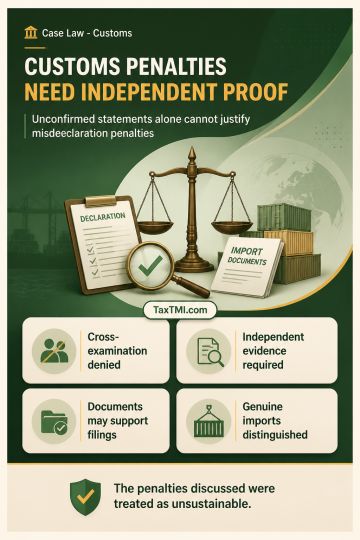
Cross-examination rights and corroborated evidence limit customs penalties for misdeclaration in genuine import transactions involving documented clea...
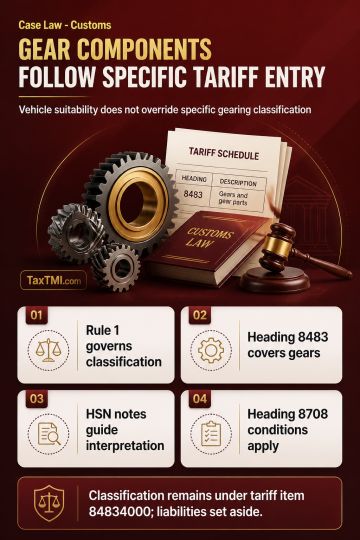
Tariff classification of vehicle gear components follows the specific gearing entry, displacing motor-vehicle parts classification and related liabili...
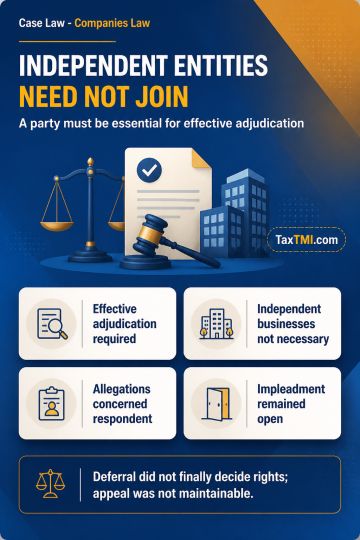
Necessary-party requirements limit impleadment of independent entities, while deferred consideration does not create an appealable adverse determinati...
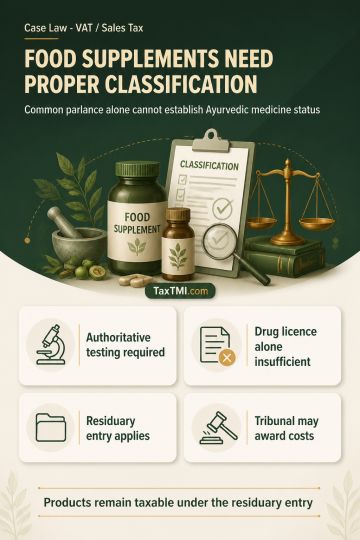
Food supplement classification requires common parlance and authoritative tests, preventing treatment as proprietary Ayurvedic medicines without suppo...
The Chhattisgarh High Court considered the maintainability of a petition challenging an order issued u/s 73(1) of the GST Act. The court noted that the order was appealable u/s 107 of the GST Act. Referring to the principle of exhaustion of alternative remedy, the court cited the Supreme Court's stance that when statutory remedies are available, writ petitions should not be entertained. The court emphasized that the petitioner had the option to challenge the order through an appeal, and dismissed the writ petition, stating that the petitioner's ability to access their email could be addressed in the appellate process. The court concluded that there were no grounds to entertain the writ petition, hence it was dismissed.
The Chhattisgarh High Court considered the maintainability of a petition challenging an order issued u/s 73(1) of the GST Act. The court noted that the order was appealable u/s 107 of the GST Act. Referring to the principle of exhaustion of alternative remedy, the court cited the Supreme Court's stance that when statutory remedies are available, writ petitions should not be entertained. The court emphasized that the petitioner had the option to challenge the order through an appeal, and dismissed the writ petition, stating that the petitioner's ability to access their email could be addressed in the appellate process. The court concluded that there were no grounds to entertain the writ petition, hence it was dismissed.
Note: It is a system-generated summary and is for quick reference only.
 TaxTMI
 of 4805







 Join Channel


 TaxTMI
