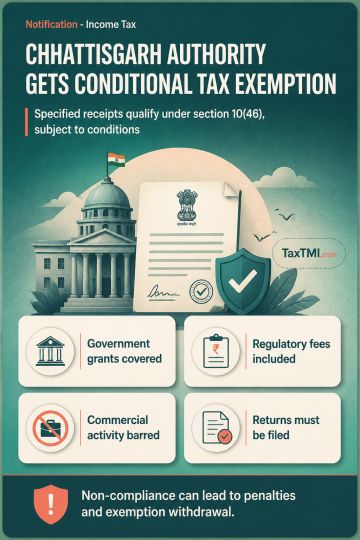
Specified regulatory authority income receives conditional tax exemption, subject to non-commercial activity, unchanged income character, and return f...
Tax exemption for regulatory authority income applies retrospectively, subject to non-commercial activity, unchanged income sources, and return-filing...
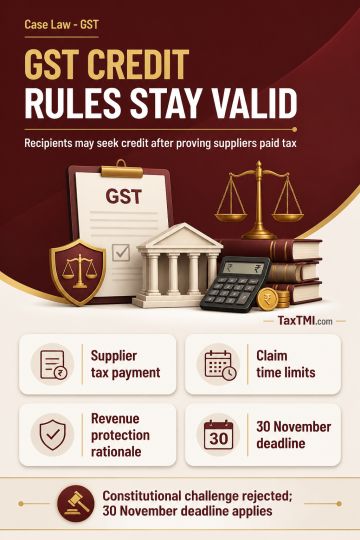
Input tax credit conditions remain constitutionally valid, with eligible recipient claims considered under GST circulars and retrospective filing dead...
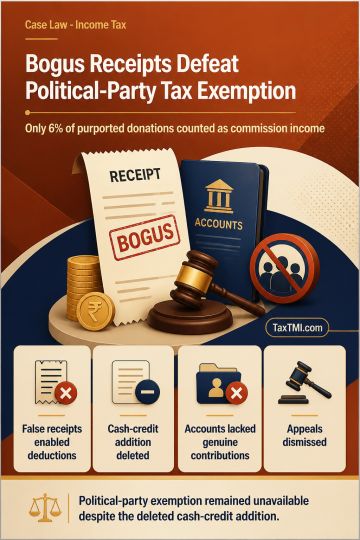
Bogus donation receipts justified commission income assessment and defeated political-party tax exemption for inaccurate accounts and reporting failur...
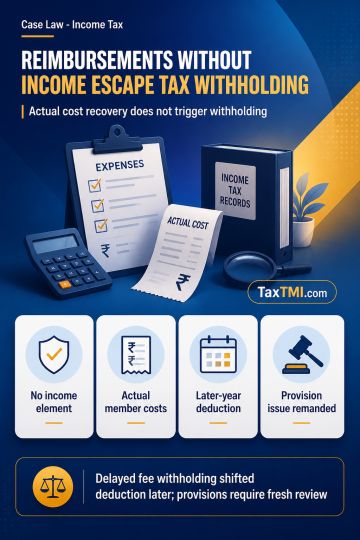
Pure reimbursement without income element escapes tax withholding, while delayed withholding and unsupported provisions face deferred or renewed scrut...
Public benefit requirement defeats charitable registration where residents' association services are reciprocal, member-only facilities governed by mu...
The National Company Law Appellate Tribunal, New Delhi, addressed the modification of a Demerger Scheme's terms by changing the Appointed Date to the date of the Impugned Order's pronouncement. The Tribunal held that if statutory provisions are complied with and there is no violation of law or public policy, the NCLT lacks jurisdiction to question the commercial wisdom of those approving the scheme. Altering the Appointed Date could have significant financial implications, and the Tribunal's role is supervisory if all sanctioning parameters are met. The reliance on a previous case was deemed incorrect as the Appointed Date should align with the scheme's provisions. The appeal was allowed, confirming the Appointed Date as per the scheme and not the date of the NCLT's pronouncement.
The National Company Law Appellate Tribunal, New Delhi, addressed the modification of a Demerger Scheme's terms by changing the Appointed Date to the date of the Impugned Order's pronouncement. The Tribunal held that if statutory provisions are complied with and there is no violation of law or public policy, the NCLT lacks jurisdiction to question the commercial wisdom of those approving the scheme. Altering the Appointed Date could have significant financial implications, and the Tribunal's role is supervisory if all sanctioning parameters are met. The reliance on a previous case was deemed incorrect as the Appointed Date should align with the scheme's provisions. The appeal was allowed, confirming the Appointed Date as per the scheme and not the date of the NCLT's pronouncement.
Note: It is a system-generated summary and is for quick reference only.
 TaxTMI
 of 4805








 Join Channel


 TaxTMI