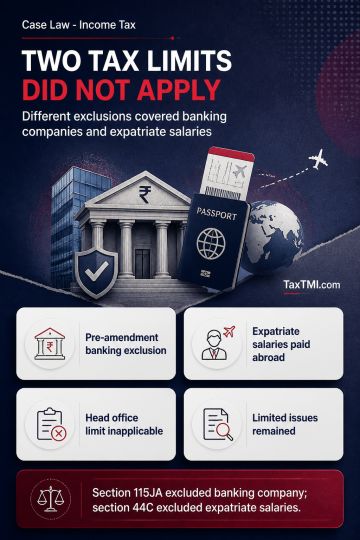
Minimum alternate tax exclusions for pre-amendment banking companies and expatriate Indian branch salaries remain outside head office expenditure limi...
Page of 4807
Press 'Enter' after typing page number.
1241 to 1260 of 96140 Results
❮
❯
❯❯
0 / 200
Expand Note
Add to Folder
No Folders have been created
+
Are you sure you want to delete "My most important" ?
The ITAT Visakhapatnam considered whether the appellant, an entity established under the APSCHE Act, qualifies as an 'instrument of state' u/s Article 12 of the Constitution for tax exemption. The tribunal found that the appellant, under full control of the State Government, meets the criteria of an instrumentality of the government. The concept of 'other authorities' in Article 12 was analyzed, referencing the Supreme Court's tests from the Som Prakash Rekhi case. The tribunal concluded that the appellant, being under the superintendence and control of the State Government, falls within the definition of 'State' u/s Article 12, entitling it to immunity from taxation. The appellant's appeal was allowed, emphasizing full tax exemption for its income and receipts.
The ITAT Visakhapatnam considered whether the appellant, an entity established under the APSCHE Act, qualifies as an 'instrument of state' u/s Article 12 of the Constitution for tax exemption. The tribunal found that the appellant, under full control of the State Government, meets the criteria of an instrumentality of the government. The concept of 'other authorities' in Article 12 was analyzed, referencing the Supreme Court's tests from the Som Prakash Rekhi case. The tribunal concluded that the appellant, being under the superintendence and control of the State Government, falls within the definition of 'State' u/s Article 12, entitling it to immunity from taxation. The appellant's appeal was allowed, emphasizing full tax exemption for its income and receipts.
Note: It is a system-generated summary and is for quick reference only.
 TaxTMI
  TaxTMI
 of 4807



 Join Channel