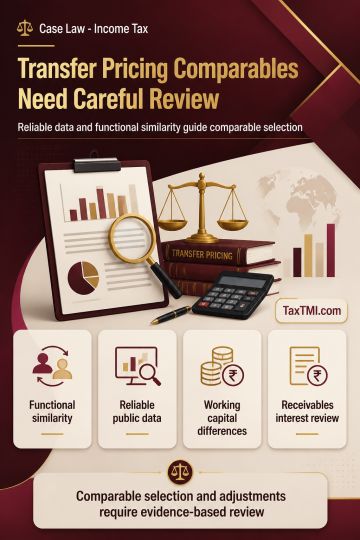
Transfer pricing comparability requires functional alignment, reliable financial data, and careful review of working capital and receivables adjustmen...
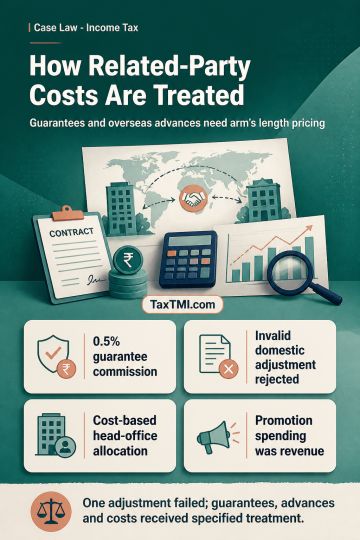
Transfer pricing rules require benchmarking corporate guarantees and associated-enterprise advances, while invalid domestic-transaction adjustments ca...
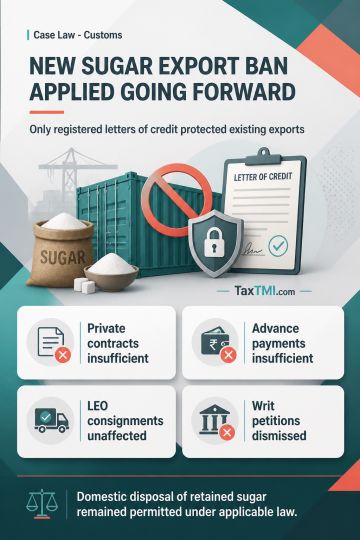
Prospective sugar export prohibition required registered letters of credit; private contracts and export quotas created no enforceable continuation ri...
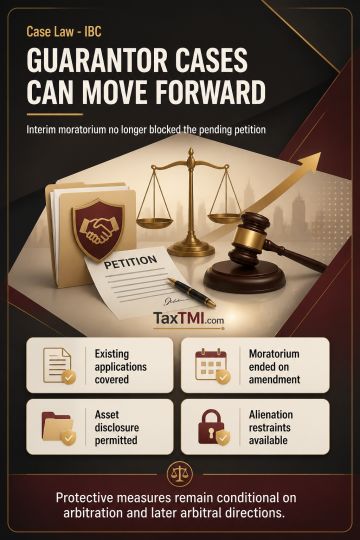
Retroactive interim-moratorium exclusion permits protective asset disclosure and preservation measures against personal guarantors pending arbitration...
The ITAT Visakhapatnam considered whether the appellant, an entity established under the APSCHE Act, qualifies as an 'instrument of state' u/s Article 12 of the Constitution for tax exemption. The tribunal found that the appellant, under full control of the State Government, meets the criteria of an instrumentality of the government. The concept of 'other authorities' in Article 12 was analyzed, referencing the Supreme Court's tests from the Som Prakash Rekhi case. The tribunal concluded that the appellant, being under the superintendence and control of the State Government, falls within the definition of 'State' u/s Article 12, entitling it to immunity from taxation. The appellant's appeal was allowed, emphasizing full tax exemption for its income and receipts.
The ITAT Visakhapatnam considered whether the appellant, an entity established under the APSCHE Act, qualifies as an 'instrument of state' u/s Article 12 of the Constitution for tax exemption. The tribunal found that the appellant, under full control of the State Government, meets the criteria of an instrumentality of the government. The concept of 'other authorities' in Article 12 was analyzed, referencing the Supreme Court's tests from the Som Prakash Rekhi case. The tribunal concluded that the appellant, being under the superintendence and control of the State Government, falls within the definition of 'State' u/s Article 12, entitling it to immunity from taxation. The appellant's appeal was allowed, emphasizing full tax exemption for its income and receipts.
Note: It is a system-generated summary and is for quick reference only.
 TaxTMI
 of 4805







 Join Channel


 TaxTMI