Defined public benefit can retain charitable character; registration renewal requires examining genuine activities and legal compliance, not surplus a...
Capital reduction is distinct from share buy-back, preventing buy-back tax; restructuring interest and related business deductions also survive scruti...
Transfer pricing and tax deductions upheld on established principles, while employee contributions and warranty provisions returned for fresh examinat...
Captive transfer pricing relies on industrial consumer tariffs, while genuine quotations can benchmark effluent treatment transfers under the Other Me...
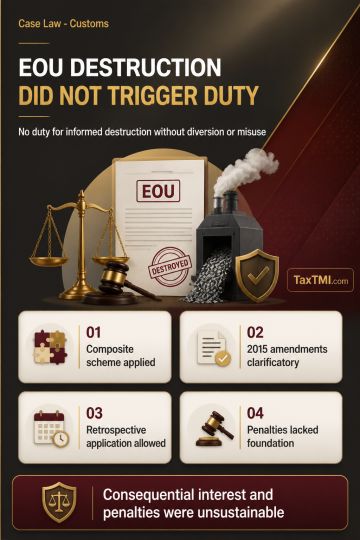
Specific tariff classification for ophthalmic instruments and extended limitation principles determine the treatment of duty demands, confiscation, an...
The Karnataka High Court addressed the issue of a Sub-Registrar refusing registration of a sale certificate due to pending Income Tax dues against the borrowers. The court held that the SARFAESI Act takes precedence over other statutory dues, including those of the Income Tax Department. Citing a Supreme Court case, it was established that the dues of secured creditors have priority over other dues. The Sub-Registrar's refusal based on Income Tax dues was deemed invalid as it exceeded the authority granted by the Registration Act and Rules. The court emphasized that Sub-Registrars must adhere strictly to the law and cannot refuse registration without valid reasons. It was recommended that the State issue necessary guidelines to prevent arbitrary refusals. The writ petition was allowed in favor of the petitioner.
The Karnataka High Court addressed the issue of a Sub-Registrar refusing registration of a sale certificate due to pending Income Tax dues against the borrowers. The court held that the SARFAESI Act takes precedence over other statutory dues, including those of the Income Tax Department. Citing a Supreme Court case, it was established that the dues of secured creditors have priority over other dues. The Sub-Registrar's refusal based on Income Tax dues was deemed invalid as it exceeded the authority granted by the Registration Act and Rules. The court emphasized that Sub-Registrars must adhere strictly to the law and cannot refuse registration without valid reasons. It was recommended that the State issue necessary guidelines to prevent arbitrary refusals. The writ petition was allowed in favor of the petitioner.
Note: It is a system-generated summary and is for quick reference only.
 TaxTMI
  TaxTMI
 of 4807
















 Join Channel