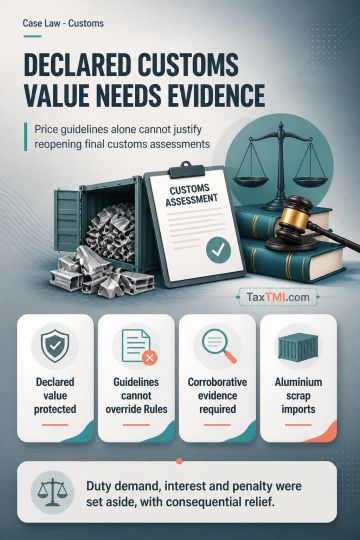
Transaction value cannot be rejected solely on non-statutory valuation guidelines without corroborative evidence supporting reassessment of final cust...
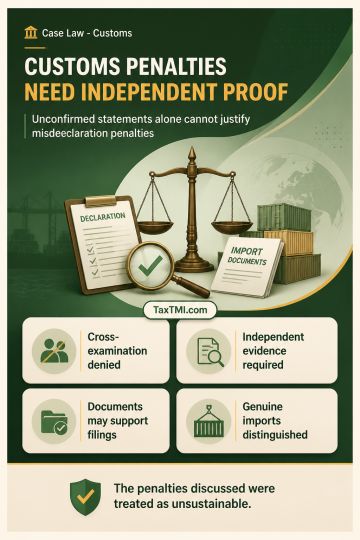
Cross-examination rights and corroborated evidence limit customs penalties for misdeclaration in genuine import transactions involving documented clea...
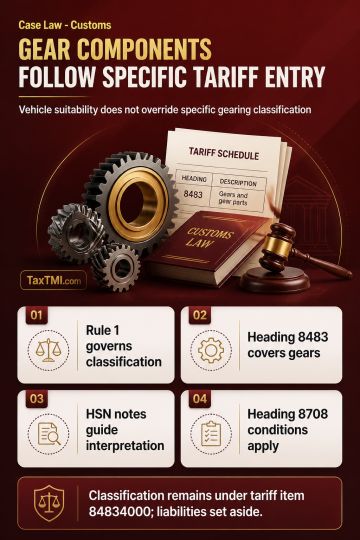
Tariff classification of vehicle gear components follows the specific gearing entry, displacing motor-vehicle parts classification and related liabili...
Necessary-party requirements limit impleadment of independent entities, while deferred consideration does not create an appealable adverse determinati...
Food supplement classification requires common parlance and authoritative tests, preventing treatment as proprietary Ayurvedic medicines without suppo...
The Karnataka High Court addressed the issue of a Sub-Registrar refusing registration of a sale certificate due to pending Income Tax dues against the borrowers. The court held that the SARFAESI Act takes precedence over other statutory dues, including those of the Income Tax Department. Citing a Supreme Court case, it was established that the dues of secured creditors have priority over other dues. The Sub-Registrar's refusal based on Income Tax dues was deemed invalid as it exceeded the authority granted by the Registration Act and Rules. The court emphasized that Sub-Registrars must adhere strictly to the law and cannot refuse registration without valid reasons. It was recommended that the State issue necessary guidelines to prevent arbitrary refusals. The writ petition was allowed in favor of the petitioner.
The Karnataka High Court addressed the issue of a Sub-Registrar refusing registration of a sale certificate due to pending Income Tax dues against the borrowers. The court held that the SARFAESI Act takes precedence over other statutory dues, including those of the Income Tax Department. Citing a Supreme Court case, it was established that the dues of secured creditors have priority over other dues. The Sub-Registrar's refusal based on Income Tax dues was deemed invalid as it exceeded the authority granted by the Registration Act and Rules. The court emphasized that Sub-Registrars must adhere strictly to the law and cannot refuse registration without valid reasons. It was recommended that the State issue necessary guidelines to prevent arbitrary refusals. The writ petition was allowed in favor of the petitioner.
Note: It is a system-generated summary and is for quick reference only.
 TaxTMI
 of 4805












 Join Channel


 TaxTMI
