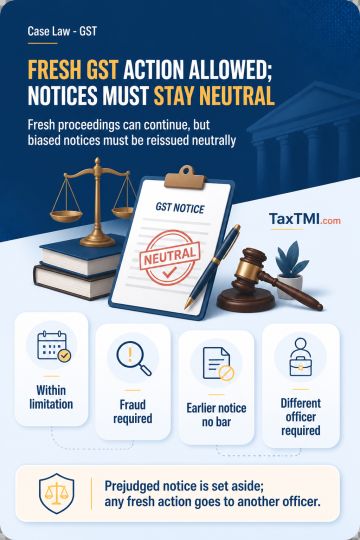
Invoice-based recovery claims remain time-barred despite separate winding-up proceedings, absent valid acknowledgment or part-payment of the disputed ...
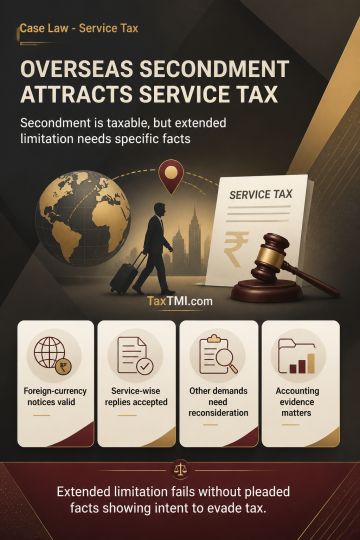
Extended limitation fails without specific suppression allegations, while overseas employee secondment remains taxable as manpower supply within norma...
Time-share accommodation classification excludes Club or Association Service where purchasers receive contractual occupancy rights without genuine mem...
CENVAT credit for trading requires reversal, while taxable-service rental credit remains proportionately available and limitation issues await resolut...
Vicarious liability for dishonoured company cheques may extend to non-signatory directors where complaints contain foundational responsibility avermen...
The Karnataka High Court addressed the issue of a Sub-Registrar refusing registration of a sale certificate due to pending Income Tax dues against the borrowers. The court held that the SARFAESI Act takes precedence over other statutory dues, including those of the Income Tax Department. Citing a Supreme Court case, it was established that the dues of secured creditors have priority over other dues. The Sub-Registrar's refusal based on Income Tax dues was deemed invalid as it exceeded the authority granted by the Registration Act and Rules. The court emphasized that Sub-Registrars must adhere strictly to the law and cannot refuse registration without valid reasons. It was recommended that the State issue necessary guidelines to prevent arbitrary refusals. The writ petition was allowed in favor of the petitioner.
The Karnataka High Court addressed the issue of a Sub-Registrar refusing registration of a sale certificate due to pending Income Tax dues against the borrowers. The court held that the SARFAESI Act takes precedence over other statutory dues, including those of the Income Tax Department. Citing a Supreme Court case, it was established that the dues of secured creditors have priority over other dues. The Sub-Registrar's refusal based on Income Tax dues was deemed invalid as it exceeded the authority granted by the Registration Act and Rules. The court emphasized that Sub-Registrars must adhere strictly to the law and cannot refuse registration without valid reasons. It was recommended that the State issue necessary guidelines to prevent arbitrary refusals. The writ petition was allowed in favor of the petitioner.
Note: It is a system-generated summary and is for quick reference only.
 TaxTMI
 of 4803











 Join Channel


 TaxTMI