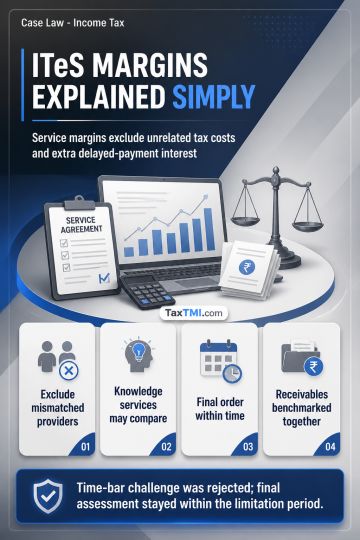
Transfer-pricing treatment of ITeS margins excludes pass-through tax recoveries and separate delayed-receivables interest after working-capital adjust...
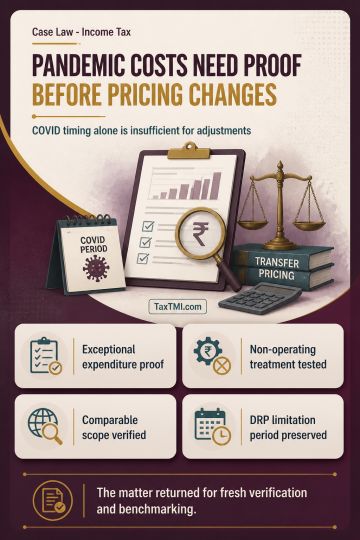
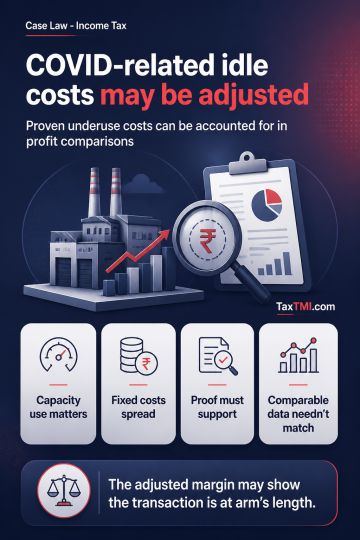
Capacity-utilisation adjustments under TNMM can neutralise substantiated COVID-related idle costs where underutilisation materially affects profitabil...
TNMM functional comparability requires excluding rice manufacturers from a pure Basmati rice trader's benchmark and recognising operating export recei...
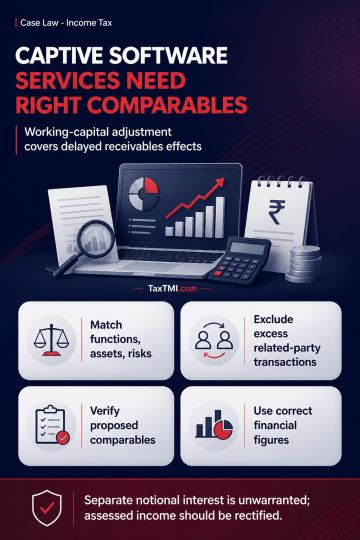
Working-capital adjustment subsumes delayed-receivable effects in TNMM benchmarking of captive software-development services, avoiding separate notion...
Transfer-pricing comparability requires exclusion of financially illogical super-profit comparables and correction of unsupported annual-report and ma...
Charitable character assessment preserves Section 80G approval despite inclusive spiritual teachings and incidental religious expenditure within the s...
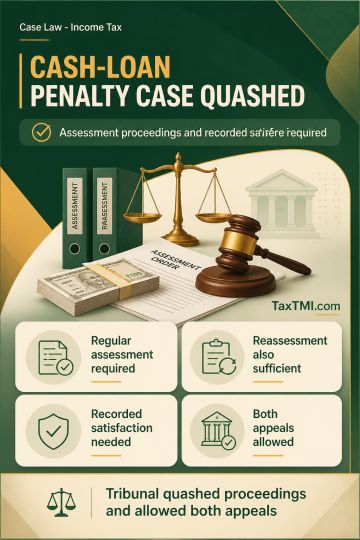
Penalty proceedings for cash-loan acceptance require assessment proceedings and recorded Assessing Officer satisfaction; absent these, the proceedings...
Page of 4828
Press 'Enter' after typing page number.
161 to 180 of 96556 Results
❮
❯
❯❯
0 / 200
Expand Note
Add to Folder
No Folders have been created
+
Are you sure you want to delete "My most important" ?
The Delhi High Court considered a bail application in a money laundering case involving a predicate offence. The delay in trial was a key issue. The court emphasized that bail decisions should be based on the merits of the case, independently of previous orders. The accused's right to fair trial, including access to legal remedies, was highlighted. The court noted that filing applications for legal rights is not a delay tactic. The accused's individual rights and legal strategies were recognized, and delays were not attributed to the prosecution or the trial court. Economic offences were deemed serious, impacting bail decisions. The applicant's alleged role in policy modifications benefiting co-accused was discussed, along with actions to influence public opinion and evidence tampering. The court found no grounds for bail solely based on trial delay, considering the gravity of the offence and legal requirements. The bail applications were ultimately dismissed.
The Delhi High Court considered a bail application in a money laundering case involving a predicate offence. The delay in trial was a key issue. The court emphasized that bail decisions should be based on the merits of the case, independently of previous orders. The accused's right to fair trial, including access to legal remedies, was highlighted. The court noted that filing applications for legal rights is not a delay tactic. The accused's individual rights and legal strategies were recognized, and delays were not attributed to the prosecution or the trial court. Economic offences were deemed serious, impacting bail decisions. The applicant's alleged role in policy modifications benefiting co-accused was discussed, along with actions to influence public opinion and evidence tampering. The court found no grounds for bail solely based on trial delay, considering the gravity of the offence and legal requirements. The bail applications were ultimately dismissed.
Note: It is a system-generated summary and is for quick reference only.
 TaxTMI
  TaxTMI
 of 4828












 Join Channel