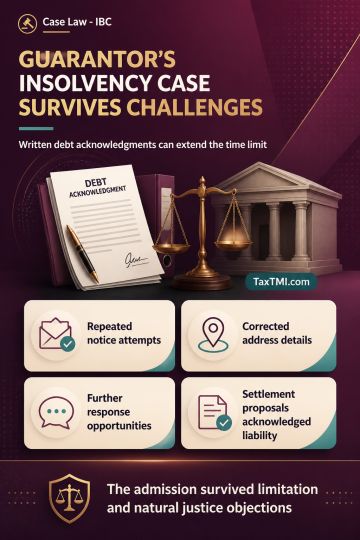
Service of notice and contractual debt acknowledgment preserved insolvency admission against a corporate guarantor despite limitation and natural just...
Original works exemption excludes standalone boulder transportation, leaving subcontracted railway-project transport services subject to service tax l...
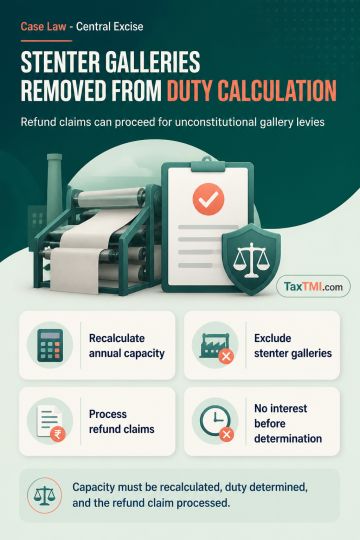
Annual production capacity determinations excluding stenter galleries support refunds for unconstitutional excise levies without an unjust-enrichment ...
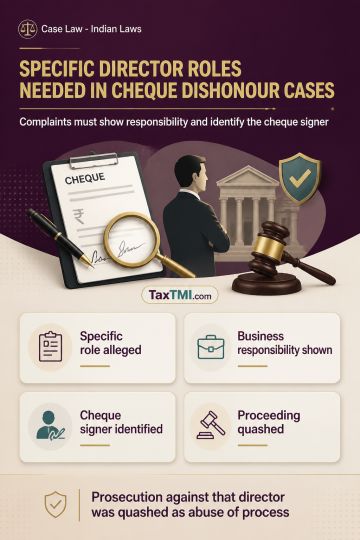
Vicarious liability for cheque dishonour requires specific allegations of responsibility and cheque signatory; generic director allegations cannot sus...
IT Resilience Index requires market infrastructure institutions to automate resilience scoring, early warnings, and continuous service-delivery monito...
The Delhi High Court considered a bail application in a money laundering case involving a predicate offence. The delay in trial was a key issue. The court emphasized that bail decisions should be based on the merits of the case, independently of previous orders. The accused's right to fair trial, including access to legal remedies, was highlighted. The court noted that filing applications for legal rights is not a delay tactic. The accused's individual rights and legal strategies were recognized, and delays were not attributed to the prosecution or the trial court. Economic offences were deemed serious, impacting bail decisions. The applicant's alleged role in policy modifications benefiting co-accused was discussed, along with actions to influence public opinion and evidence tampering. The court found no grounds for bail solely based on trial delay, considering the gravity of the offence and legal requirements. The bail applications were ultimately dismissed.
The Delhi High Court considered a bail application in a money laundering case involving a predicate offence. The delay in trial was a key issue. The court emphasized that bail decisions should be based on the merits of the case, independently of previous orders. The accused's right to fair trial, including access to legal remedies, was highlighted. The court noted that filing applications for legal rights is not a delay tactic. The accused's individual rights and legal strategies were recognized, and delays were not attributed to the prosecution or the trial court. Economic offences were deemed serious, impacting bail decisions. The applicant's alleged role in policy modifications benefiting co-accused was discussed, along with actions to influence public opinion and evidence tampering. The court found no grounds for bail solely based on trial delay, considering the gravity of the offence and legal requirements. The bail applications were ultimately dismissed.
Note: It is a system-generated summary and is for quick reference only.
 TaxTMI
  TaxTMI
 of 4828










 Join Channel