Minimum alternate tax exclusions for pre-amendment banking companies and expatriate Indian branch salaries remain outside head office expenditure limi...
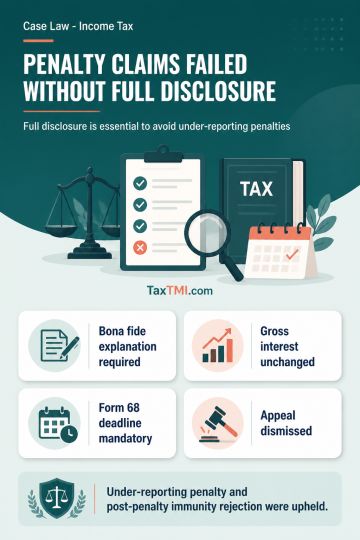
Bona fide disclosure requirements govern under-reporting penalties, and post-penalty immunity applications cannot secure available statutory protectio...
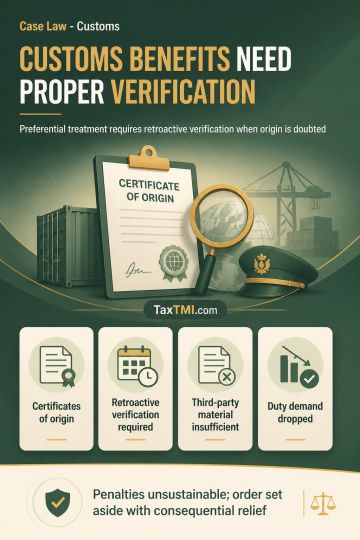
Certificate-of-origin verification procedure governs preferential customs benefits; denial without retroactive verification was set aside with consequ...
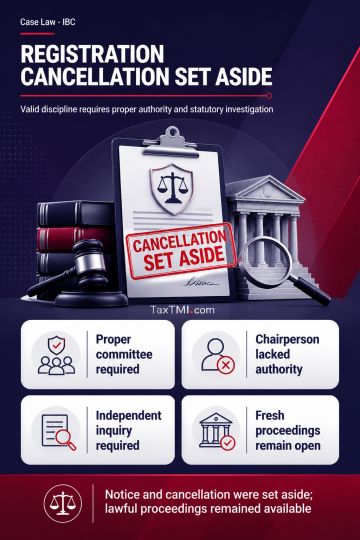
Disciplinary Committee jurisdiction and mandatory investigation requirements invalidated cancellation of an insolvency professional's registration and...
The Calcutta High Court considered the maintainability of a petition challenging the penalty imposed u/s 129(3) of the West Bengal Goods and Services Tax Act, 2017. The court found that the E-way bill and delivery challan did not comply with Rule 55 of the CGST Rules and the WBGST Rules, raising suspicions of concealment. The petitioner failed to provide necessary documents to clarify the situation, leading to doubts about their bona fides. The court held that the Revenue had jurisdiction to assess tax and compute penalties based on the value of the goods. The order was deemed to be reasoned and passed after giving the petitioner a fresh hearing. Despite the availability of alternative remedies, the court allowed the petition challenging jurisdiction. The court emphasized the responsibility of registered persons to comply with legal requirements and dismissed the writ petition.
The Calcutta High Court considered the maintainability of a petition challenging the penalty imposed u/s 129(3) of the West Bengal Goods and Services Tax Act, 2017. The court found that the E-way bill and delivery challan did not comply with Rule 55 of the CGST Rules and the WBGST Rules, raising suspicions of concealment. The petitioner failed to provide necessary documents to clarify the situation, leading to doubts about their bona fides. The court held that the Revenue had jurisdiction to assess tax and compute penalties based on the value of the goods. The order was deemed to be reasoned and passed after giving the petitioner a fresh hearing. Despite the availability of alternative remedies, the court allowed the petition challenging jurisdiction. The court emphasized the responsibility of registered persons to comply with legal requirements and dismissed the writ petition.
Note: It is a system-generated summary and is for quick reference only.
 TaxTMI
 of 4801









 Join Channel


 TaxTMI