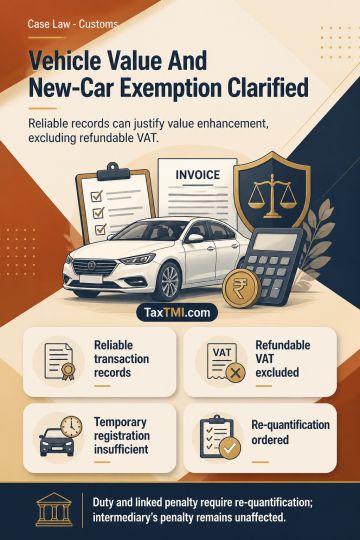
Transaction value rejection requires reliable corroboration; refundable VAT is excluded and temporary registration does not defeat new-vehicle exempti...
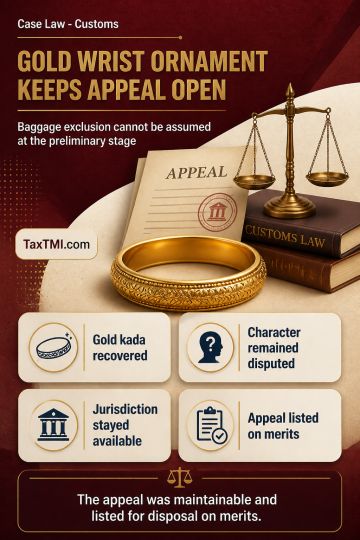
Appellate jurisdiction remains available where a wrist-worn gold ornament cannot conclusively be characterised as imported baggage at the preliminary ...
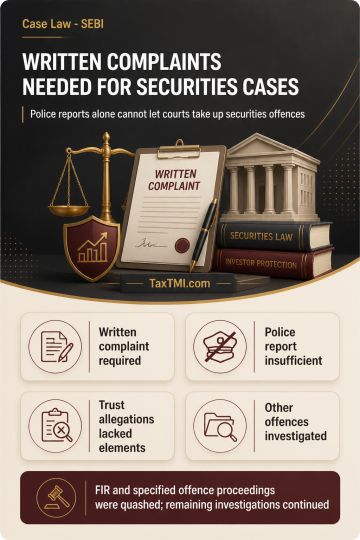
Written complaint requirement bars cognizance on police reports for securities offences, while unsupported breach of trust and cheating allegations fa...
Risk-based postal import clearance standardises electronic assessment, document requests, duty realisation and delivery controls at Foreign Post Offic...
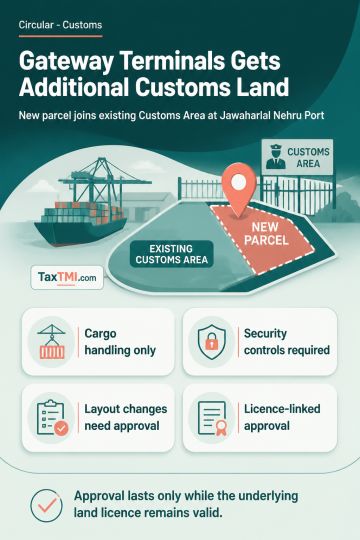
Customs Cargo Service Provider appointment extends custodianship to additional terminal land, subject to cargo-control, security and licence condition...
Page of 4786
Press 'Enter' after typing page number.
61 to 80 of 95714 Results
❮
❯
❯❯
0 / 200
Expand Note
Add to Folder
No Folders have been created
+
Are you sure you want to delete "My most important" ?
The Calcutta High Court considered the maintainability of a petition challenging the penalty imposed u/s 129(3) of the West Bengal Goods and Services Tax Act, 2017. The court found that the E-way bill and delivery challan did not comply with Rule 55 of the CGST Rules and the WBGST Rules, raising suspicions of concealment. The petitioner failed to provide necessary documents to clarify the situation, leading to doubts about their bona fides. The court held that the Revenue had jurisdiction to assess tax and compute penalties based on the value of the goods. The order was deemed to be reasoned and passed after giving the petitioner a fresh hearing. Despite the availability of alternative remedies, the court allowed the petition challenging jurisdiction. The court emphasized the responsibility of registered persons to comply with legal requirements and dismissed the writ petition.
The Calcutta High Court considered the maintainability of a petition challenging the penalty imposed u/s 129(3) of the West Bengal Goods and Services Tax Act, 2017. The court found that the E-way bill and delivery challan did not comply with Rule 55 of the CGST Rules and the WBGST Rules, raising suspicions of concealment. The petitioner failed to provide necessary documents to clarify the situation, leading to doubts about their bona fides. The court held that the Revenue had jurisdiction to assess tax and compute penalties based on the value of the goods. The order was deemed to be reasoned and passed after giving the petitioner a fresh hearing. Despite the availability of alternative remedies, the court allowed the petition challenging jurisdiction. The court emphasized the responsibility of registered persons to comply with legal requirements and dismissed the writ petition.
Note: It is a system-generated summary and is for quick reference only.
 TaxTMI
 of 4786




 Join Channel


 TaxTMI