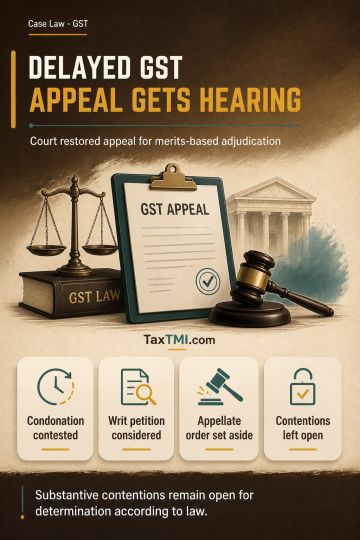
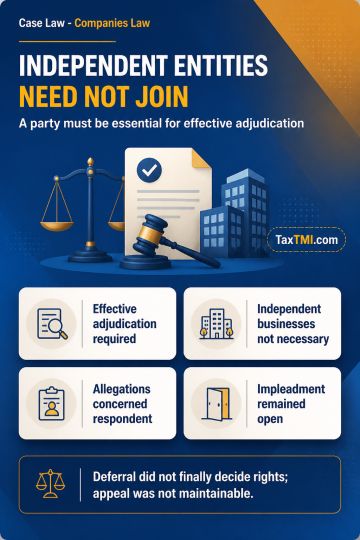
Necessary-party requirements limit impleadment of independent entities, while deferred consideration does not create an appealable adverse determinati...
Food supplement classification requires common parlance and authoritative tests, preventing treatment as proprietary Ayurvedic medicines without suppo...
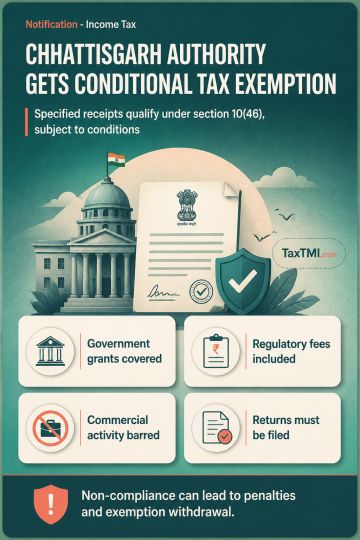
Specified regulatory authority income receives conditional tax exemption, subject to non-commercial activity, unchanged income character, and return f...
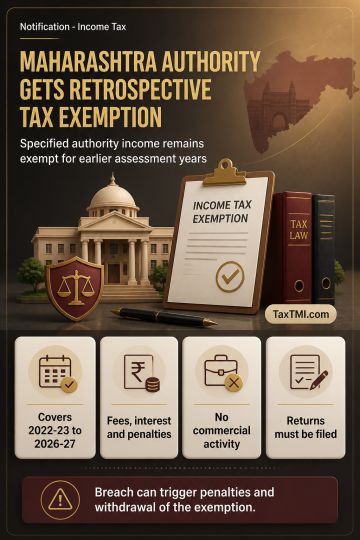
Tax exemption for regulatory authority income applies retrospectively, subject to non-commercial activity, unchanged income sources, and return-filing...
Input tax credit conditions remain constitutionally valid, with eligible recipient claims considered under GST circulars and retrospective filing dead...
The Calcutta High Court considered the maintainability of a petition challenging the penalty imposed u/s 129(3) of the West Bengal Goods and Services Tax Act, 2017. The court found that the E-way bill and delivery challan did not comply with Rule 55 of the CGST Rules and the WBGST Rules, raising suspicions of concealment. The petitioner failed to provide necessary documents to clarify the situation, leading to doubts about their bona fides. The court held that the Revenue had jurisdiction to assess tax and compute penalties based on the value of the goods. The order was deemed to be reasoned and passed after giving the petitioner a fresh hearing. Despite the availability of alternative remedies, the court allowed the petition challenging jurisdiction. The court emphasized the responsibility of registered persons to comply with legal requirements and dismissed the writ petition.
The Calcutta High Court considered the maintainability of a petition challenging the penalty imposed u/s 129(3) of the West Bengal Goods and Services Tax Act, 2017. The court found that the E-way bill and delivery challan did not comply with Rule 55 of the CGST Rules and the WBGST Rules, raising suspicions of concealment. The petitioner failed to provide necessary documents to clarify the situation, leading to doubts about their bona fides. The court held that the Revenue had jurisdiction to assess tax and compute penalties based on the value of the goods. The order was deemed to be reasoned and passed after giving the petitioner a fresh hearing. Despite the availability of alternative remedies, the court allowed the petition challenging jurisdiction. The court emphasized the responsibility of registered persons to comply with legal requirements and dismissed the writ petition.
Note: It is a system-generated summary and is for quick reference only.
 TaxTMI
 of 4792










 Join Channel


 TaxTMI