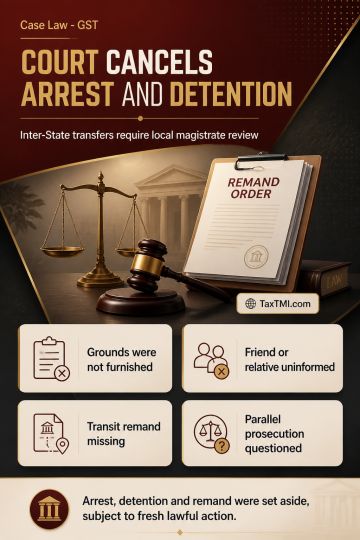
Arrest safeguards and transit remand requirements invalidated detention following inter-State transfer without communicated grounds or magistrate auth...
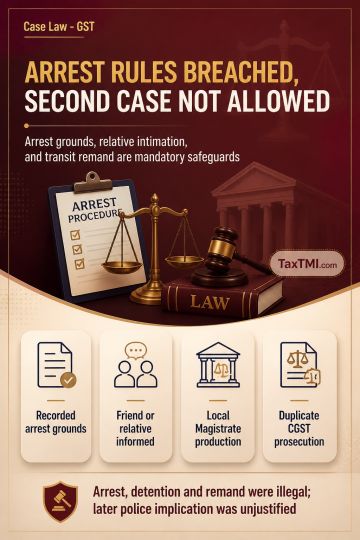
Arrest safeguards require disclosed grounds, relative intimation and transit remand, while duplicate prosecution under the CGST framework is unsustain...
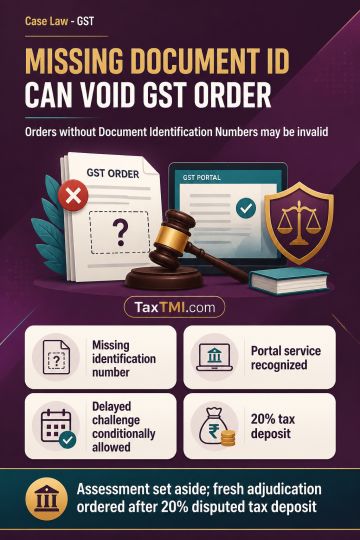
Document Identification Number defects can invalidate GST assessments, with delayed challenges entertained conditionally where patent irregularities e...
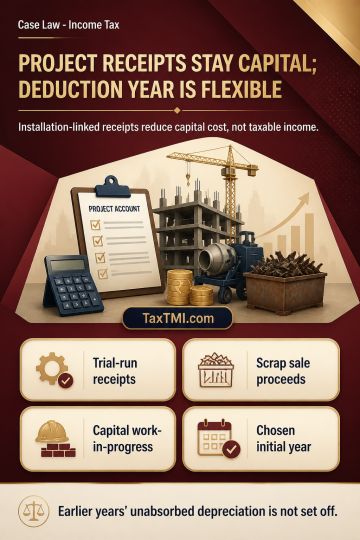
Windmill commissioning evidence supported higher depreciation where grid connection and electricity generation proved operational use before the relev...
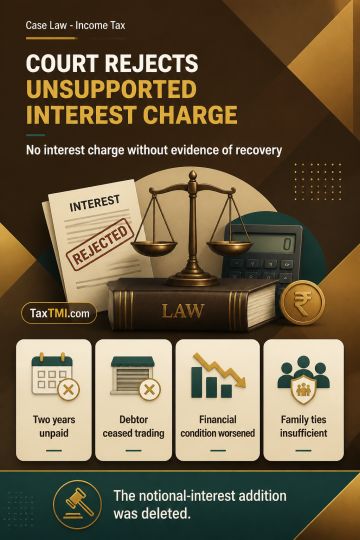
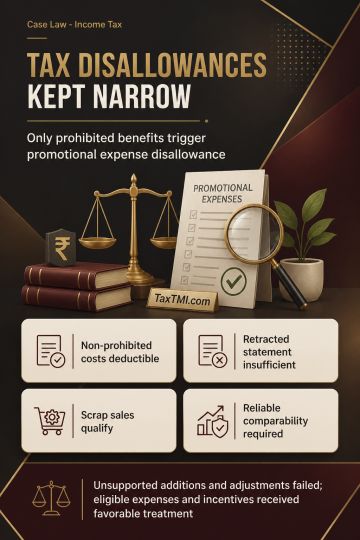
Pharmaceutical promotion and transfer-pricing comparability principles limited disallowances, while uncorroborated search allegations and unsupported ...
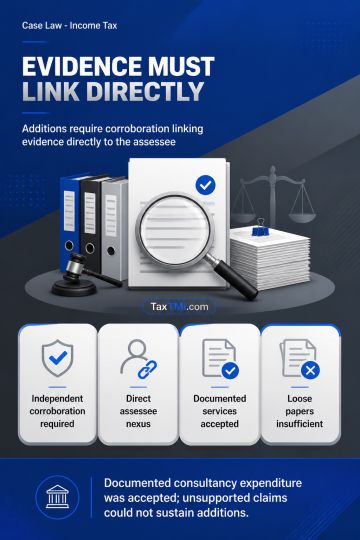
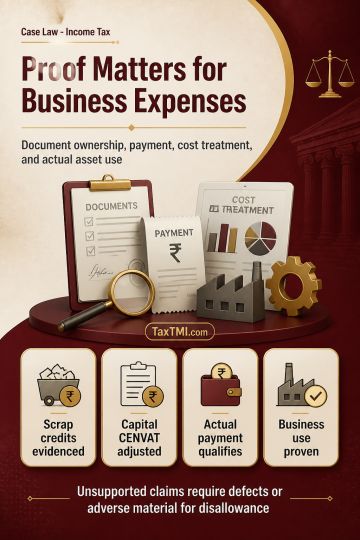
Business expenditure substantiation supports scrap credits, statutory payments and expense claims, while depreciation requires proof of actual busines...
The ITAT Ahmedabad considered a case involving exemption u/s 11 for a trust with a belatedly filed income return. The tribunal held that the trust, registered u/s 12AA, was eligible for deduction as a charitable trust. It noted the amendment to Section 139(4) post the Finance Act, 2016, allowing filing within one year from the end of the relevant assessment year. The tribunal disagreed with the CIT(A)'s interpretation of the due date. The trust mistakenly reported an amount under the wrong section in the return, but as the filed return was valid and processed u/s 143(1), the CIT(A)'s rejection was deemed unjust. The tribunal also addressed the late filing of form 10B, citing the proviso to section 143(1)(a) and a previous decision condoning such delays. Following the precedent, the tribunal set aside the CIT(A)'s order, deleted the addition made, and allowed the exemption u/s 11, ultimately ruling in favor of the assessee.
The ITAT Ahmedabad considered a case involving exemption u/s 11 for a trust with a belatedly filed income return. The tribunal held that the trust, registered u/s 12AA, was eligible for deduction as a charitable trust. It noted the amendment to Section 139(4) post the Finance Act, 2016, allowing filing within one year from the end of the relevant assessment year. The tribunal disagreed with the CIT(A)'s interpretation of the due date. The trust mistakenly reported an amount under the wrong section in the return, but as the filed return was valid and processed u/s 143(1), the CIT(A)'s rejection was deemed unjust. The tribunal also addressed the late filing of form 10B, citing the proviso to section 143(1)(a) and a previous decision condoning such delays. Following the precedent, the tribunal set aside the CIT(A)'s order, deleted the addition made, and allowed the exemption u/s 11, ultimately ruling in favor of the assessee.
Note: It is a system-generated summary and is for quick reference only.
 TaxTMI
 of 4784





 Join Channel


 TaxTMI