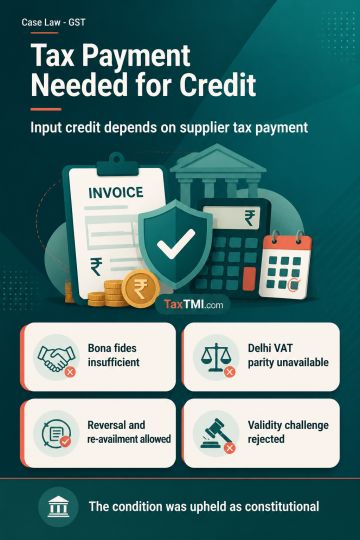
Input tax credit conditions remain constitutionally valid, with eligible recipient claims considered under GST circulars and retrospective filing dead...
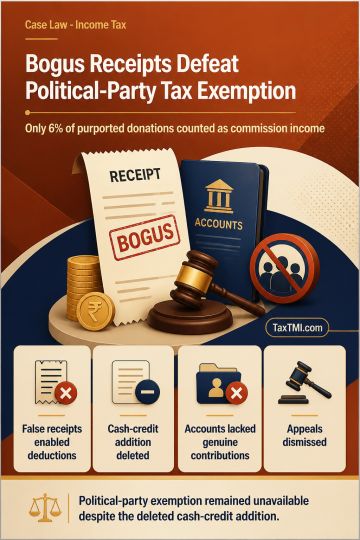
Bogus donation receipts justified commission income assessment and defeated political-party tax exemption for inaccurate accounts and reporting failur...
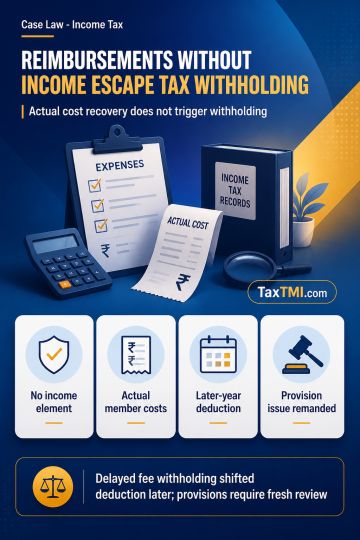
Pure reimbursement without income element escapes tax withholding, while delayed withholding and unsupported provisions face deferred or renewed scrut...
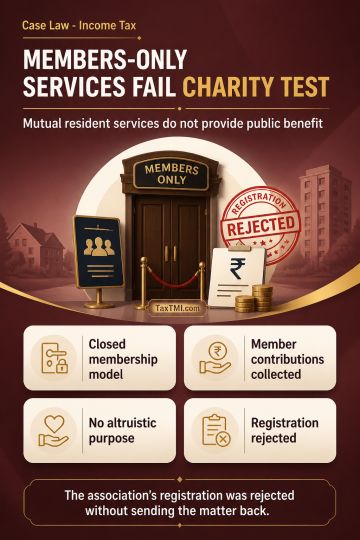
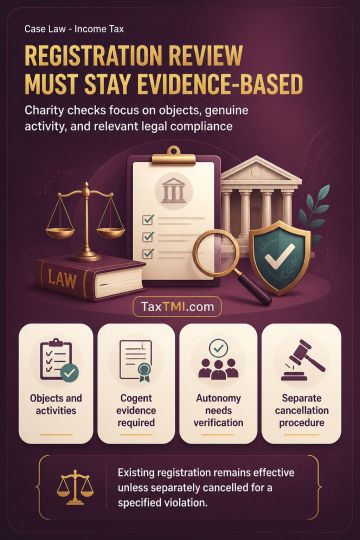
Public benefit requirement defeats charitable registration where residents' association services are reciprocal, member-only facilities governed by mu...
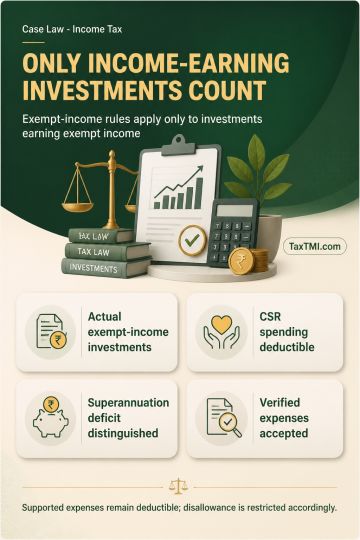
Exempt-income expenditure disallowance is confined to investments that actually generated exempt income, while supported business expenses remain dedu...
The ITAT Ahmedabad considered a case involving exemption u/s 11 for a trust with a belatedly filed income return. The tribunal held that the trust, registered u/s 12AA, was eligible for deduction as a charitable trust. It noted the amendment to Section 139(4) post the Finance Act, 2016, allowing filing within one year from the end of the relevant assessment year. The tribunal disagreed with the CIT(A)'s interpretation of the due date. The trust mistakenly reported an amount under the wrong section in the return, but as the filed return was valid and processed u/s 143(1), the CIT(A)'s rejection was deemed unjust. The tribunal also addressed the late filing of form 10B, citing the proviso to section 143(1)(a) and a previous decision condoning such delays. Following the precedent, the tribunal set aside the CIT(A)'s order, deleted the addition made, and allowed the exemption u/s 11, ultimately ruling in favor of the assessee.
The ITAT Ahmedabad considered a case involving exemption u/s 11 for a trust with a belatedly filed income return. The tribunal held that the trust, registered u/s 12AA, was eligible for deduction as a charitable trust. It noted the amendment to Section 139(4) post the Finance Act, 2016, allowing filing within one year from the end of the relevant assessment year. The tribunal disagreed with the CIT(A)'s interpretation of the due date. The trust mistakenly reported an amount under the wrong section in the return, but as the filed return was valid and processed u/s 143(1), the CIT(A)'s rejection was deemed unjust. The tribunal also addressed the late filing of form 10B, citing the proviso to section 143(1)(a) and a previous decision condoning such delays. Following the precedent, the tribunal set aside the CIT(A)'s order, deleted the addition made, and allowed the exemption u/s 11, ultimately ruling in favor of the assessee.
Note: It is a system-generated summary and is for quick reference only.
 TaxTMI
 of 4782






 Join Channel


 TaxTMI