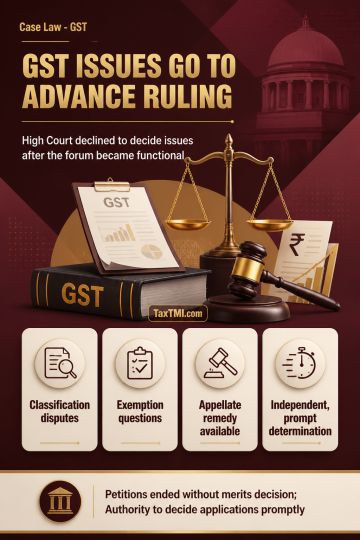
Advance-ruling mechanism governs pending GST classification, exemption and taxability disputes, limiting writ review once the specialised forum functi...
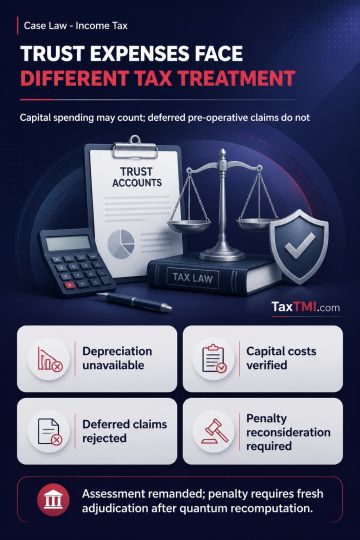
Charitable trust income application permits verified capital expenditure but rejects deferred pre-operative claims and requires reconsideration of con...
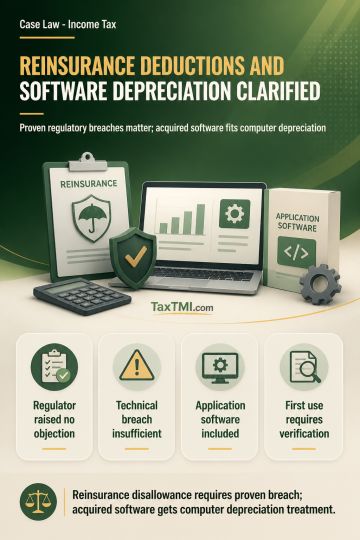
Reinsurance premium deductions require established regulatory breaches, while independently acquired software qualifies within the computer depreciati...
The ITAT Delhi addressed the issue of accrual of income and chargeability of income-tax on surcharge income offered by the assessee on a receipt basis. The assessee argued for taxation upon actual receipt of the surcharge, while the AO rejected this method. The tribunal held that the surcharge, being disputable and not mandatorily payable at the time of bill payment, was not an accrued receipt and thus not taxable as real income. The AO was directed to verify when the surcharge income was realized and offered for tax. Additionally, regarding u/s 14A r.w.r. 8D, the tribunal admitted additional evidence provided by the assessee and remanded the issue to the AO for re-examination. In a separate matter for Assessment Year 2014-15, it was held that investments were made from own funds, not borrowed funds, thus disallowance u/s 14A was not permissible. Appeals were allowed for statistical purposes.
The ITAT Delhi addressed the issue of accrual of income and chargeability of income-tax on surcharge income offered by the assessee on a receipt basis. The assessee argued for taxation upon actual receipt of the surcharge, while the AO rejected this method. The tribunal held that the surcharge, being disputable and not mandatorily payable at the time of bill payment, was not an accrued receipt and thus not taxable as real income. The AO was directed to verify when the surcharge income was realized and offered for tax. Additionally, regarding u/s 14A r.w.r. 8D, the tribunal admitted additional evidence provided by the assessee and remanded the issue to the AO for re-examination. In a separate matter for Assessment Year 2014-15, it was held that investments were made from own funds, not borrowed funds, thus disallowance u/s 14A was not permissible. Appeals were allowed for statistical purposes.
Note: It is a system-generated summary and is for quick reference only.
 TaxTMI
 of 4782





 Join Channel


 TaxTMI
