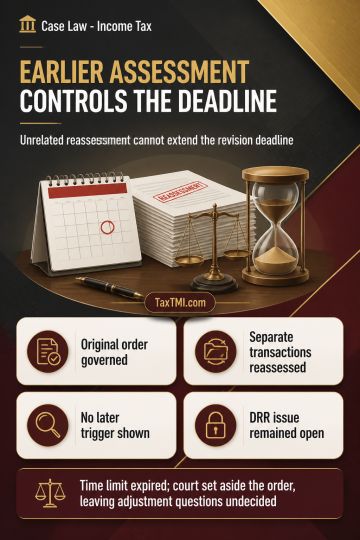
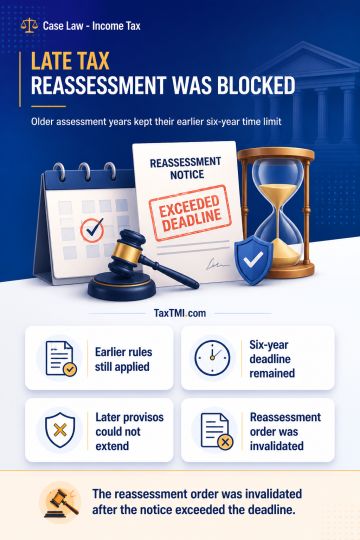
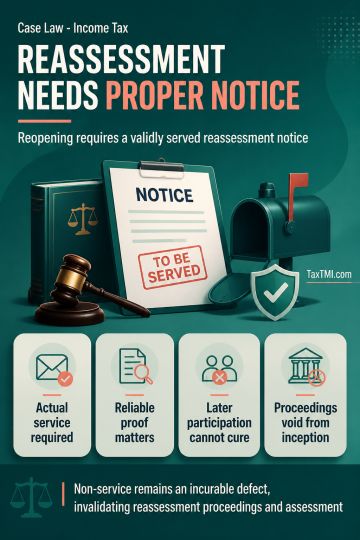
Pre-amendment reassessment limitation bars late notices under the preserved regime, invalidating consequential reassessment for affected earlier asses...
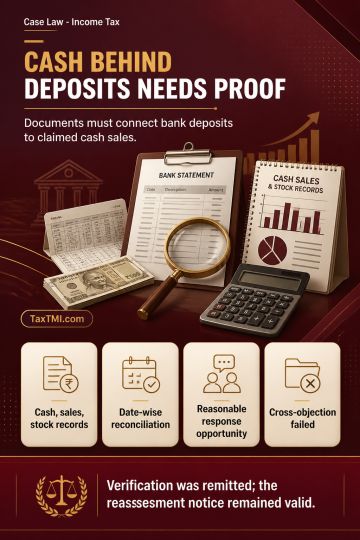
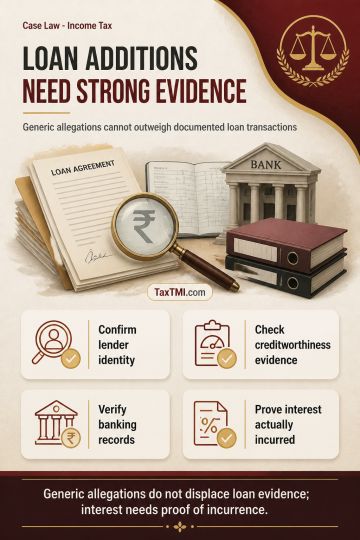
Cash-sales explanations for bank deposits require documentary reconciliation; reassessment notice survived where effective response time was available...
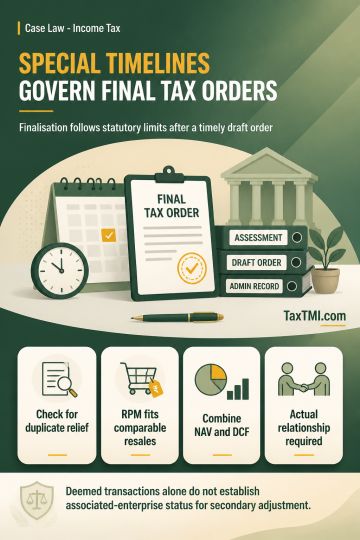
Functional comparability in transfer pricing prevents ad hoc arm's length adjustments where functions, assets, risks and reliable comparables are unes...
The ITAT Delhi addressed the issue of accrual of income and chargeability of income-tax on surcharge income offered by the assessee on a receipt basis. The assessee argued for taxation upon actual receipt of the surcharge, while the AO rejected this method. The tribunal held that the surcharge, being disputable and not mandatorily payable at the time of bill payment, was not an accrued receipt and thus not taxable as real income. The AO was directed to verify when the surcharge income was realized and offered for tax. Additionally, regarding u/s 14A r.w.r. 8D, the tribunal admitted additional evidence provided by the assessee and remanded the issue to the AO for re-examination. In a separate matter for Assessment Year 2014-15, it was held that investments were made from own funds, not borrowed funds, thus disallowance u/s 14A was not permissible. Appeals were allowed for statistical purposes.
The ITAT Delhi addressed the issue of accrual of income and chargeability of income-tax on surcharge income offered by the assessee on a receipt basis. The assessee argued for taxation upon actual receipt of the surcharge, while the AO rejected this method. The tribunal held that the surcharge, being disputable and not mandatorily payable at the time of bill payment, was not an accrued receipt and thus not taxable as real income. The AO was directed to verify when the surcharge income was realized and offered for tax. Additionally, regarding u/s 14A r.w.r. 8D, the tribunal admitted additional evidence provided by the assessee and remanded the issue to the AO for re-examination. In a separate matter for Assessment Year 2014-15, it was held that investments were made from own funds, not borrowed funds, thus disallowance u/s 14A was not permissible. Appeals were allowed for statistical purposes.
Note: It is a system-generated summary and is for quick reference only.
 TaxTMI
  TaxTMI
 of 4918