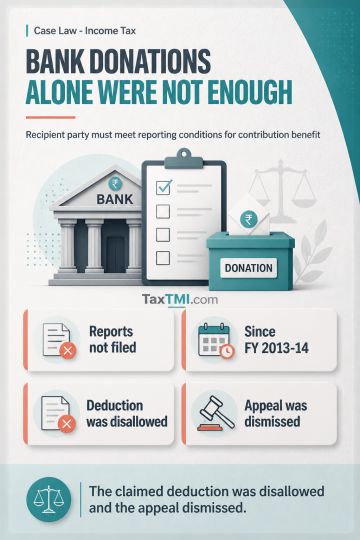
Political contribution deductions require recipient party compliance with contribution-reporting conditions; banking-channel donations alone do not qu...
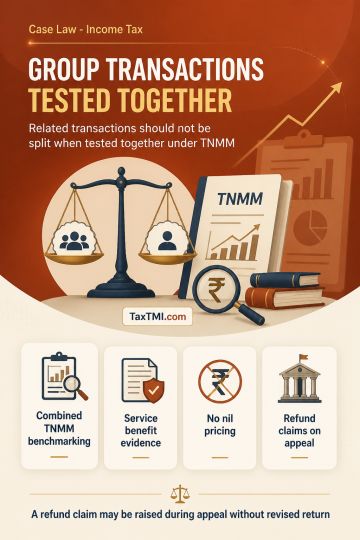
Aggregation under TNMM prevents selective testing of intra-group services without comparable uncontrolled transactions, while appellate additional cla...
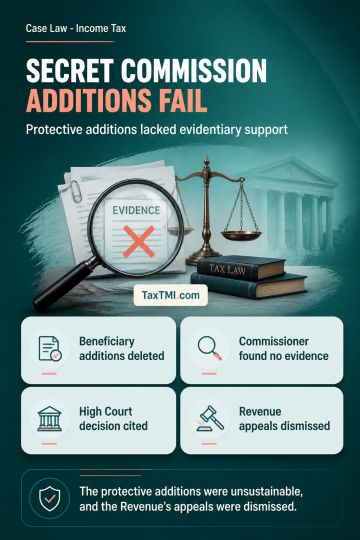
Protective assessment cannot duplicate identical receipts under competing characterisations; remote services did not establish a taxable permanent est...
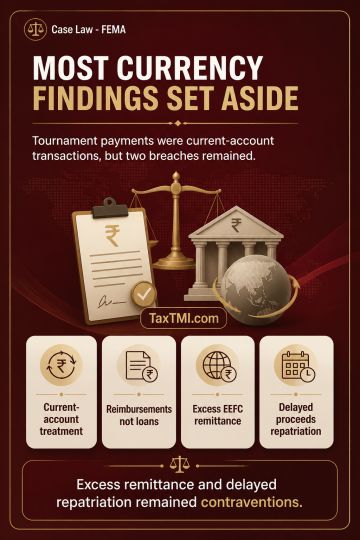
Current account treatment of overseas tournament services removed most FEMA findings, but excess EEFC remittance and delayed repatriation remained bre...
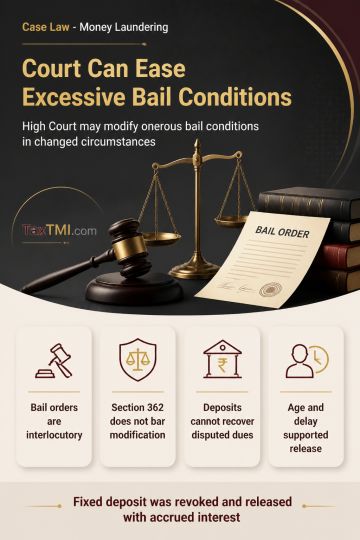
Modification of bail conditions remains available through inherent jurisdiction where onerous deposits undermine justice and cannot recover disputed d...
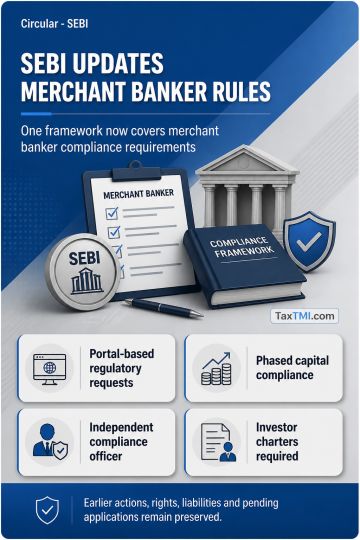
Merchant banker regulation consolidates registration, governance, capital, reporting, outsourcing and investor-protection requirements under an update...
The ITAT Delhi addressed the issue of accrual of income and chargeability of income-tax on surcharge income offered by the assessee on a receipt basis. The assessee argued for taxation upon actual receipt of the surcharge, while the AO rejected this method. The tribunal held that the surcharge, being disputable and not mandatorily payable at the time of bill payment, was not an accrued receipt and thus not taxable as real income. The AO was directed to verify when the surcharge income was realized and offered for tax. Additionally, regarding u/s 14A r.w.r. 8D, the tribunal admitted additional evidence provided by the assessee and remanded the issue to the AO for re-examination. In a separate matter for Assessment Year 2014-15, it was held that investments were made from own funds, not borrowed funds, thus disallowance u/s 14A was not permissible. Appeals were allowed for statistical purposes.
The ITAT Delhi addressed the issue of accrual of income and chargeability of income-tax on surcharge income offered by the assessee on a receipt basis. The assessee argued for taxation upon actual receipt of the surcharge, while the AO rejected this method. The tribunal held that the surcharge, being disputable and not mandatorily payable at the time of bill payment, was not an accrued receipt and thus not taxable as real income. The AO was directed to verify when the surcharge income was realized and offered for tax. Additionally, regarding u/s 14A r.w.r. 8D, the tribunal admitted additional evidence provided by the assessee and remanded the issue to the AO for re-examination. In a separate matter for Assessment Year 2014-15, it was held that investments were made from own funds, not borrowed funds, thus disallowance u/s 14A was not permissible. Appeals were allowed for statistical purposes.
Note: It is a system-generated summary and is for quick reference only.
 TaxTMI
 of 4782












 Join Channel


 TaxTMI