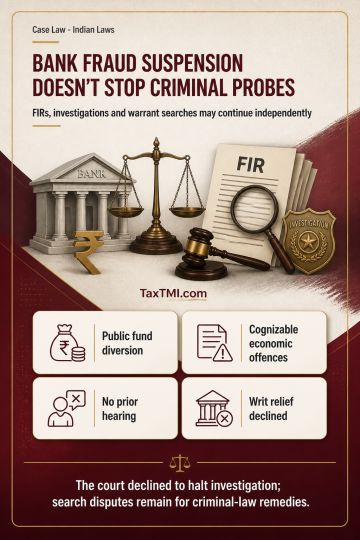
Administrative fraud classification suspension does not halt independent criminal investigation or warrant-based searches into alleged economic offenc...
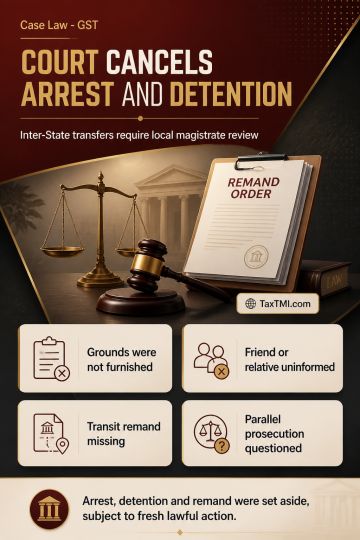
Arrest safeguards and transit remand requirements invalidated detention following inter-State transfer without communicated grounds or magistrate auth...
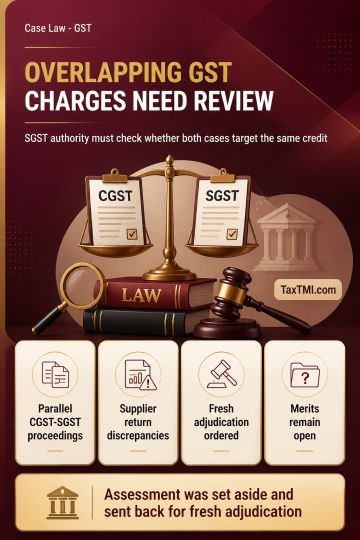
Arrest safeguards require disclosed grounds, relative intimation and transit remand, while duplicate prosecution under the CGST framework is unsustain...
Document Identification Number defects can invalidate GST assessments, with delayed challenges entertained conditionally where patent irregularities e...
The Madhya Pradesh High Court considered the maintainability of a petition regarding the recovery of short paid Central Excise Duty. The court noted that the availability of an alternative remedy does not automatically bar the filing of a writ petition, as it depends on the specific circumstances of each case. Citing a Supreme Court judgment, the court emphasized that the doctrine of alternative remedy is a matter of policy and discretion rather than a strict legal rule. The petitioner was found to have been denied the necessary documents and a fair hearing, leading to a violation of principles of natural justice. As a result, the court set aside the final order of recovery and remanded the matter back to the authority for fresh adjudication, allowing the petition by way of remand.
The Madhya Pradesh High Court considered the maintainability of a petition regarding the recovery of short paid Central Excise Duty. The court noted that the availability of an alternative remedy does not automatically bar the filing of a writ petition, as it depends on the specific circumstances of each case. Citing a Supreme Court judgment, the court emphasized that the doctrine of alternative remedy is a matter of policy and discretion rather than a strict legal rule. The petitioner was found to have been denied the necessary documents and a fair hearing, leading to a violation of principles of natural justice. As a result, the court set aside the final order of recovery and remanded the matter back to the authority for fresh adjudication, allowing the petition by way of remand.
Note: It is a system-generated summary and is for quick reference only.
 TaxTMI
 of 4788













 Join Channel


 TaxTMI
