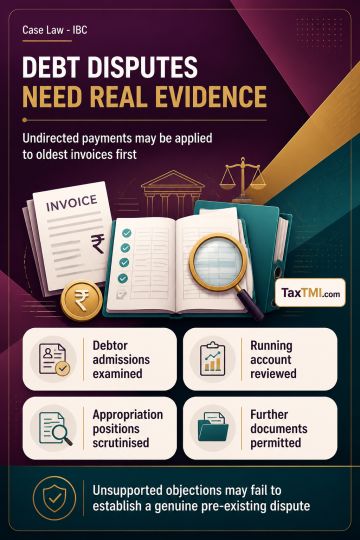
Pre-existing operational debt disputes require genuine evidence, while undirected running-account payments may be appropriated on a first-in-first-out...
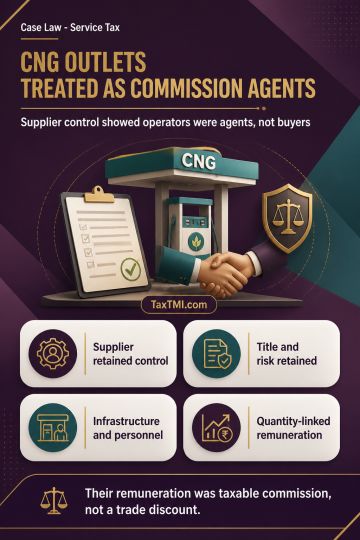
Agency in CNG distribution makes outlet operators commission agents, rendering taxable Business Auxiliary Service rather than purchasing goods for res...
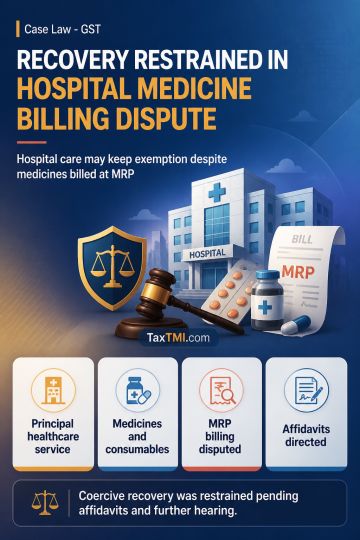
Composite inpatient healthcare supply may retain exemption despite MRP medicine billing, while separate taxable sale characterisation remains disputed...
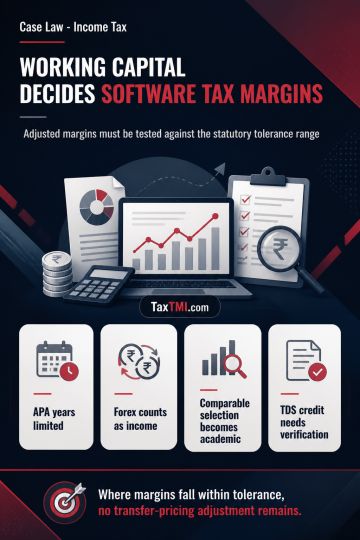
Working-capital adjustment determines whether software-services transfer-pricing margins fall within the statutory tolerance range, eliminating any ad...
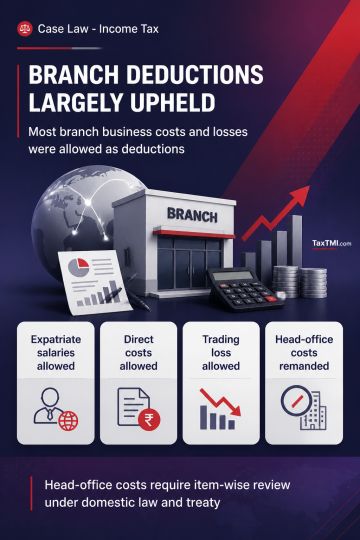
Permanent establishment deductions upheld for expatriate salaries, direct costs and trading losses, while head-office costs require fresh classificati...
Page of 4796
Press 'Enter' after typing page number.
881 to 900 of 95916 Results
❮
❯
❯❯
0 / 200
Expand Note
Add to Folder
No Folders have been created
+
Are you sure you want to delete "My most important" ?
The Securities and Exchange Board of India (Infrastructure Investment Trusts) (Amendment) Regulations, 2024, effective from May 27, 2024, introduce several key changes. Notably, subordinate units are defined and excluded from the calculation of outstanding units (Reg. 2). Regulation 4 mandates only one class of units with equal voting and distribution rights, and allows unitholders with at least 10% of units to nominate a director, subject to recusal provisions. Regulation 12 excludes subordinate units from minimum unitholding requirements. Regulation 14 prohibits public fund-raising if subordinate units are outstanding. Chapter IVA outlines the framework for issuing subordinate units, including issuance conditions, transfer restrictions, and reclassification criteria. Regulation 22 and 23 require separate disclosure of unitholding patterns for ordinary and subordinate units.
The Securities and Exchange Board of India (Infrastructure Investment Trusts) (Amendment) Regulations, 2024, effective from May 27, 2024, introduce several key changes. Notably, subordinate units are defined and excluded from the calculation of outstanding units (Reg. 2). Regulation 4 mandates only one class of units with equal voting and distribution rights, and allows unitholders with at least 10% of units to nominate a director, subject to recusal provisions. Regulation 12 excludes subordinate units from minimum unitholding requirements. Regulation 14 prohibits public fund-raising if subordinate units are outstanding. Chapter IVA outlines the framework for issuing subordinate units, including issuance conditions, transfer restrictions, and reclassification criteria. Regulation 22 and 23 require separate disclosure of unitholding patterns for ordinary and subordinate units.
Note: It is a system-generated summary and is for quick reference only.
 TaxTMI
 of 4796







 Join Channel


 TaxTMI