Clean slate principle extinguishes uncrystallised operational claims and bars continuation of pending recovery and arbitral proceedings after plan app...
Works contract classification governs composite layout-development contracts where VAT-paid goods are transferred alongside construction and infrastru...
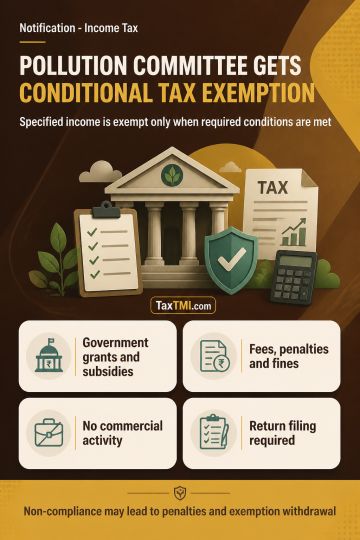
Specified income tax exemption for pollution control body remains conditional on non-commercial activity, unchanged income character, and return filin...
Jurisdictional facts in certificate-of-origin discrepancies can support customs show-cause proceedings, leaving factual explanations for departmental ...
The Calcutta High Court addressed the nature of a sales tax incentive received under the "West Bengal Incentive Scheme, 2000" for industrial promotion. The scheme aimed at industrializing backward areas by providing incentives. The court held that the subsidy received was a capital receipt, not subject to Section 41(1) of the Income Tax Act, 1961. Referring to a previous case, the court emphasized the capital nature of the subsidy. The appellant failed to differentiate this case from a prior judgment on the same scheme. Consequently, the court ruled in favor of the respondent, affirming the subsidy as a capital receipt.
The Calcutta High Court addressed the nature of a sales tax incentive received under the "West Bengal Incentive Scheme, 2000" for industrial promotion. The scheme aimed at industrializing backward areas by providing incentives. The court held that the subsidy received was a capital receipt, not subject to Section 41(1) of the Income Tax Act, 1961. Referring to a previous case, the court emphasized the capital nature of the subsidy. The appellant failed to differentiate this case from a prior judgment on the same scheme. Consequently, the court ruled in favor of the respondent, affirming the subsidy as a capital receipt.
Note: It is a system-generated summary and is for quick reference only.
 TaxTMI
 of 4784














 Join Channel


 TaxTMI