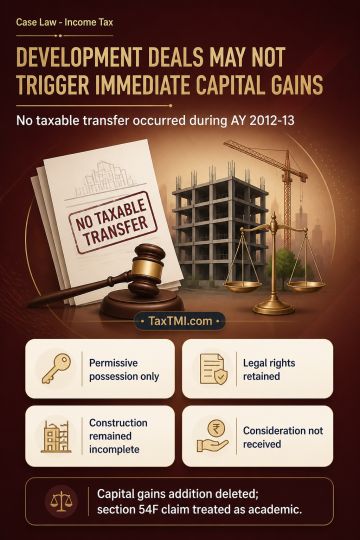
Development agreements require legal possession or effective enjoyment for capital gains transfer; permissive possession and deferred consideration de...
Prolonged sterilisation of development rights supports capital-gains treatment, while business-income disallowances cannot govern capital-gains comput...
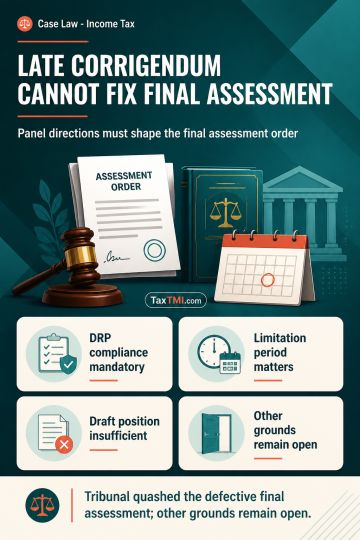
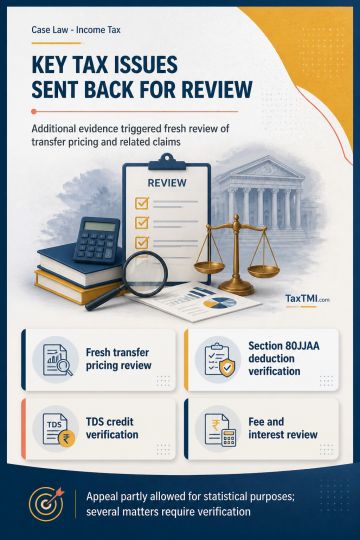
Additional evidence in transfer pricing dispute leads to fresh examination, while tax deductions, TDS credit, fee and refund interest require verifica...
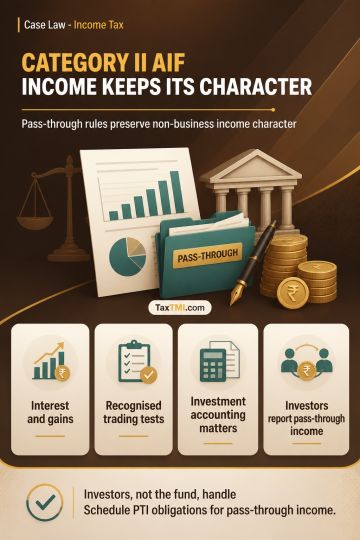
Category II AIF pass-through taxation preserves non-business income character; investment receipts cannot be reclassified without applying recognised ...
The ITAT Kolkata held that the addition on a protective basis made by the Assessing Officer in the hands of the assessee, concerning a loan received from a director and relatives, was not sustainable. The LTCG earned by the loan creditors from share transactions in penny stock companies was the subject of substantive additions in the creditors' cases. Three creditors accepted the additions and paid taxes under Vivad Se Viswas Scheme, explaining the source of the loan as unaccounted income. The 4th creditor, also an Income Tax assessee, had the addition made in their case. As there was no allegation that the creditor's income/LTCG was linked to the assessee's unexplained income, and with the assessment of the other 3 creditors being time-barred without substantive additions, the source of the amount/LTCG was deemed admitted by the department in their hands. Consequently, the protective additions in the assessee's hands were deemed unsustainable, ruling in favor of the assessee.
The ITAT Kolkata held that the addition on a protective basis made by the Assessing Officer in the hands of the assessee, concerning a loan received from a director and relatives, was not sustainable. The LTCG earned by the loan creditors from share transactions in penny stock companies was the subject of substantive additions in the creditors' cases. Three creditors accepted the additions and paid taxes under Vivad Se Viswas Scheme, explaining the source of the loan as unaccounted income. The 4th creditor, also an Income Tax assessee, had the addition made in their case. As there was no allegation that the creditor's income/LTCG was linked to the assessee's unexplained income, and with the assessment of the other 3 creditors being time-barred without substantive additions, the source of the amount/LTCG was deemed admitted by the department in their hands. Consequently, the protective additions in the assessee's hands were deemed unsustainable, ruling in favor of the assessee.
Note: It is a system-generated summary and is for quick reference only.
 TaxTMI
 of 4801





 Join Channel


 TaxTMI