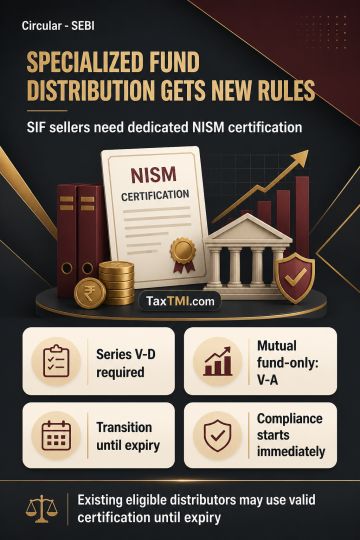
Specialized Investment Fund distribution now requires dedicated certification, while transitional recognition preserves existing qualified distributor...
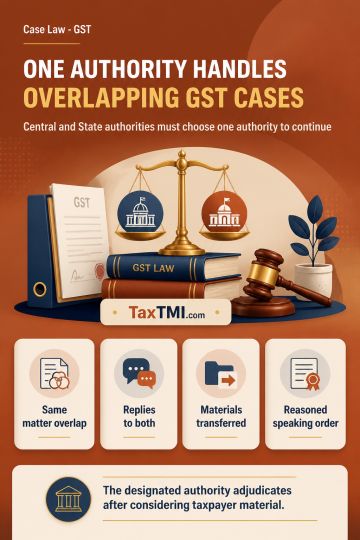
Overlapping GST proceedings require Central and State authorities to designate one competent authority for coordinated adjudication of the same matter...
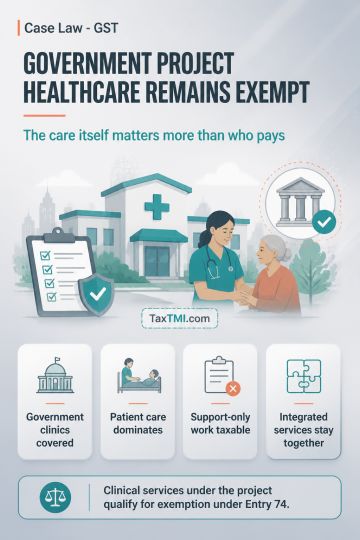
Composite healthcare supplies retain exemption when patient care is the contract's essential character, despite payment through an implementing agency...
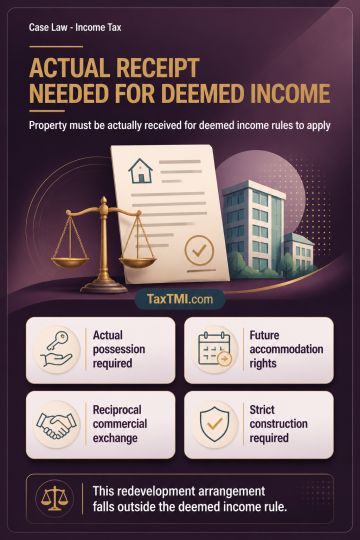
Receipt of immovable property requires actual possession or enjoyment; redevelopment allotments exchanged for tenancy rights fall outside deemed incom...
Page of 4796
Press 'Enter' after typing page number.
841 to 860 of 95916 Results
❮
❯
❯❯
0 / 200
Expand Note
Add to Folder
No Folders have been created
+
Are you sure you want to delete "My most important" ?
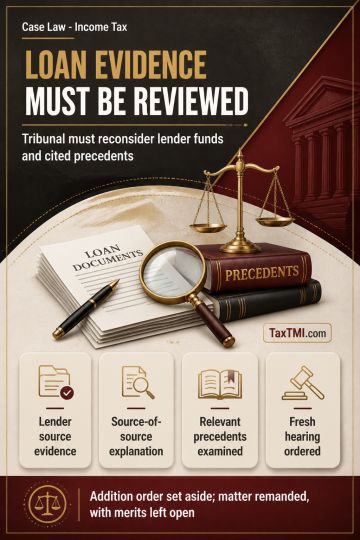
The ITAT Kolkata held that the addition on a protective basis made by the Assessing Officer in the hands of the assessee, concerning a loan received from a director and relatives, was not sustainable. The LTCG earned by the loan creditors from share transactions in penny stock companies was the subject of substantive additions in the creditors' cases. Three creditors accepted the additions and paid taxes under Vivad Se Viswas Scheme, explaining the source of the loan as unaccounted income. The 4th creditor, also an Income Tax assessee, had the addition made in their case. As there was no allegation that the creditor's income/LTCG was linked to the assessee's unexplained income, and with the assessment of the other 3 creditors being time-barred without substantive additions, the source of the amount/LTCG was deemed admitted by the department in their hands. Consequently, the protective additions in the assessee's hands were deemed unsustainable, ruling in favor of the assessee.
The ITAT Kolkata held that the addition on a protective basis made by the Assessing Officer in the hands of the assessee, concerning a loan received from a director and relatives, was not sustainable. The LTCG earned by the loan creditors from share transactions in penny stock companies was the subject of substantive additions in the creditors' cases. Three creditors accepted the additions and paid taxes under Vivad Se Viswas Scheme, explaining the source of the loan as unaccounted income. The 4th creditor, also an Income Tax assessee, had the addition made in their case. As there was no allegation that the creditor's income/LTCG was linked to the assessee's unexplained income, and with the assessment of the other 3 creditors being time-barred without substantive additions, the source of the amount/LTCG was deemed admitted by the department in their hands. Consequently, the protective additions in the assessee's hands were deemed unsustainable, ruling in favor of the assessee.
Note: It is a system-generated summary and is for quick reference only.
 TaxTMI
 of 4796





 Join Channel


 TaxTMI