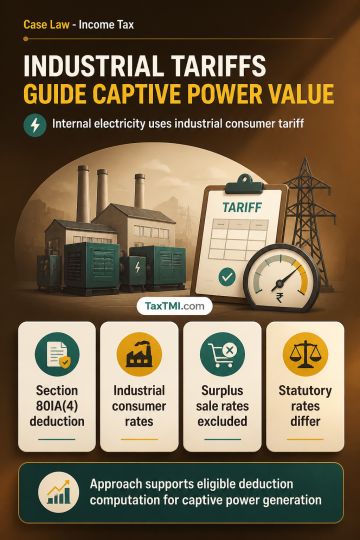
Market value for captive electricity consumption follows industrial consumer tariffs, supporting profit computation for the power generation deduction...
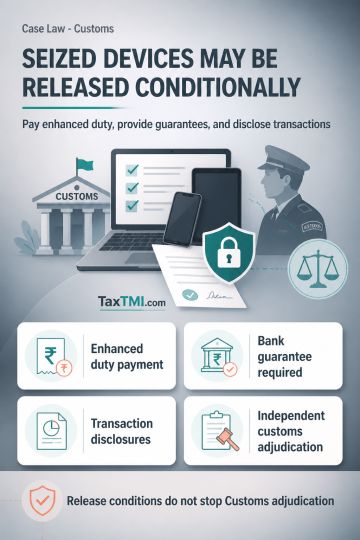
Provisional release of seized imports requires enhanced duty payment, bank guarantee and disclosures while customs adjudication proceeds independently...
The Punjab & Haryana High Court allowed the compounding of the offence u/s 138 N.I. Act between parties in a dishonour of cheque case. Citing precedent, the court held that compounding can be done during trial or by the High Court u/r Section 320(6) Cr.P.C. Settlement led to acquittal u/s 147 of NI Act and Section 320 Cr.P.C. The parties' voluntary settlement justified allowing compounding. The revision petition was allowed, with 15% of the cheque amount to be deposited with a specified center, leading to acquittal of the petitioner from the charge u/s 138 of NI Act.
The Punjab & Haryana High Court allowed the compounding of the offence u/s 138 N.I. Act between parties in a dishonour of cheque case. Citing precedent, the court held that compounding can be done during trial or by the High Court u/r Section 320(6) Cr.P.C. Settlement led to acquittal u/s 147 of NI Act and Section 320 Cr.P.C. The parties' voluntary settlement justified allowing compounding. The revision petition was allowed, with 15% of the cheque amount to be deposited with a specified center, leading to acquittal of the petitioner from the charge u/s 138 of NI Act.
Note: It is a system-generated summary and is for quick reference only.
 TaxTMI
 of 4790
















 Join Channel


 TaxTMI
