Inherited property sale proceeds require capital-gains treatment where ownership is supported by evidence, not suspicion or unverified signature doubt...
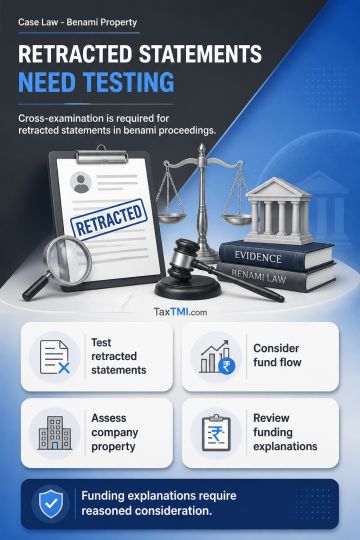
Cross-examination of retracted statements is essential where foundational evidence supports a benami allegation and documented funding explanations re...
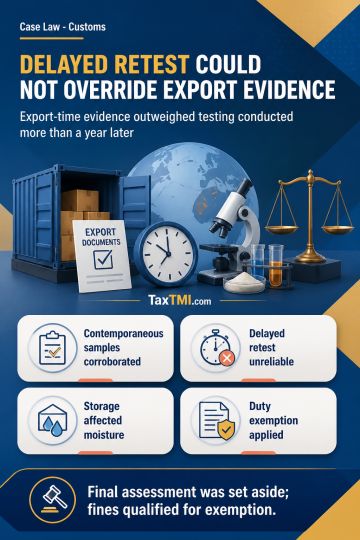
Capital-goods exemption covers plant-modernisation accessories, while the import restriction applies only to earlier capital-goods components and spar...
Constitutional judicial review permits challenges to ECIRs and connected money-laundering proceedings where coercive action affects fundamental intere...
The Punjab & Haryana High Court allowed the compounding of the offence u/s 138 N.I. Act between parties in a dishonour of cheque case. Citing precedent, the court held that compounding can be done during trial or by the High Court u/r Section 320(6) Cr.P.C. Settlement led to acquittal u/s 147 of NI Act and Section 320 Cr.P.C. The parties' voluntary settlement justified allowing compounding. The revision petition was allowed, with 15% of the cheque amount to be deposited with a specified center, leading to acquittal of the petitioner from the charge u/s 138 of NI Act.
The Punjab & Haryana High Court allowed the compounding of the offence u/s 138 N.I. Act between parties in a dishonour of cheque case. Citing precedent, the court held that compounding can be done during trial or by the High Court u/r Section 320(6) Cr.P.C. Settlement led to acquittal u/s 147 of NI Act and Section 320 Cr.P.C. The parties' voluntary settlement justified allowing compounding. The revision petition was allowed, with 15% of the cheque amount to be deposited with a specified center, leading to acquittal of the petitioner from the charge u/s 138 of NI Act.
Note: It is a system-generated summary and is for quick reference only.
 TaxTMI
 of 4780




















 Join Channel


 TaxTMI