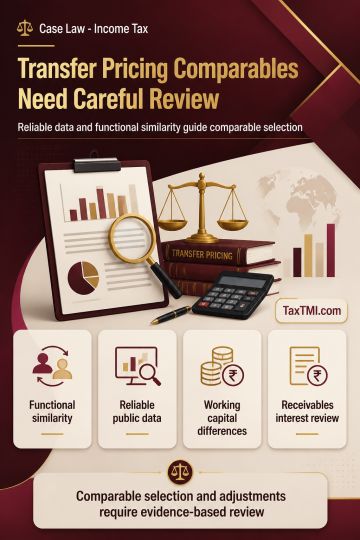
Transfer pricing comparability requires functional alignment, reliable financial data, and careful review of working capital and receivables adjustmen...
Transfer pricing rules require benchmarking corporate guarantees and associated-enterprise advances, while invalid domestic-transaction adjustments ca...
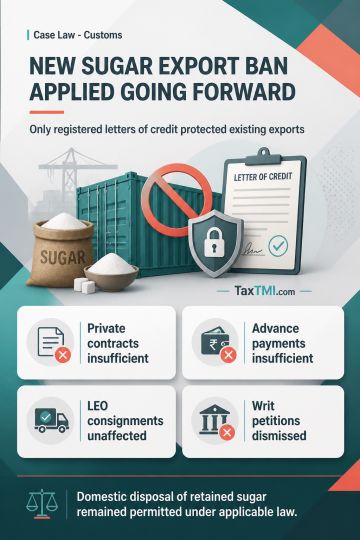
Prospective sugar export prohibition required registered letters of credit; private contracts and export quotas created no enforceable continuation ri...
Retroactive interim-moratorium exclusion permits protective asset disclosure and preservation measures against personal guarantors pending arbitration...
The ITAT Delhi held that denial of Foreign Tax Credit (FTC) claim due to late filing of Form 67 after the due date of filing Income Tax Return (ITR) was not justified. Section 90 of the Act along with Article 25(2)(a) allows USA tax paid as a credit against Indian tax, limited to the proportion of Indian tax. Rule 128(9) mandates filing Form 67 by the due date of ITR filing u/s 139(1), recently amended to end of assessment year. The Rule does not specify denial of FTC if Form 67 is filed late or incorrectly and rectified later. Filing Form 67 is procedural, not mandatory. Violating procedural norms does not extinguish substantive right to claim FTC. The JAO is directed to allow FTC limited to proportion of Indian tax payable, ruling in favor of the assessee.
The ITAT Delhi held that denial of Foreign Tax Credit (FTC) claim due to late filing of Form 67 after the due date of filing Income Tax Return (ITR) was not justified. Section 90 of the Act along with Article 25(2)(a) allows USA tax paid as a credit against Indian tax, limited to the proportion of Indian tax. Rule 128(9) mandates filing Form 67 by the due date of ITR filing u/s 139(1), recently amended to end of assessment year. The Rule does not specify denial of FTC if Form 67 is filed late or incorrectly and rectified later. Filing Form 67 is procedural, not mandatory. Violating procedural norms does not extinguish substantive right to claim FTC. The JAO is directed to allow FTC limited to proportion of Indian tax payable, ruling in favor of the assessee.
Note: It is a system-generated summary and is for quick reference only.
 TaxTMI
 of 4782














 Join Channel


 TaxTMI