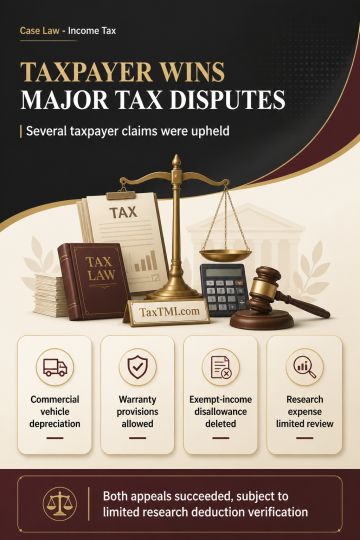
Commercial vehicle depreciation, scientifically determined warranty provisions and exempt-income disallowances were resolved in favour of the taxpayer...
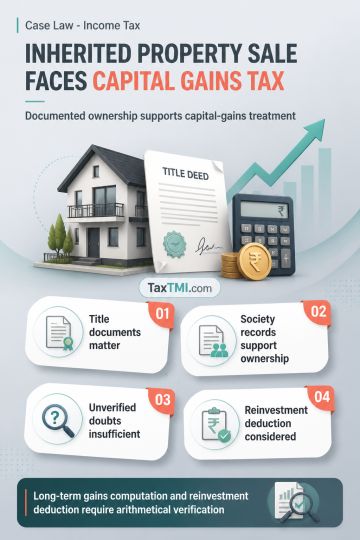
Inherited property sale proceeds require capital-gains treatment where ownership is supported by evidence, not suspicion or unverified signature doubt...
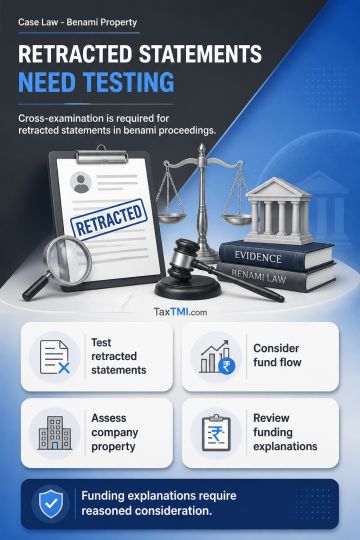
Cross-examination of retracted statements is essential where foundational evidence supports a benami allegation and documented funding explanations re...
Capital-goods exemption covers plant-modernisation accessories, while the import restriction applies only to earlier capital-goods components and spar...
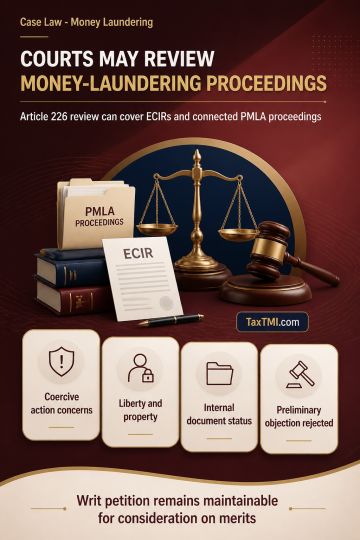
Constitutional judicial review permits challenges to ECIRs and connected money-laundering proceedings where coercive action affects fundamental intere...
The Calcutta High Court considered a case involving the clandestine removal of wire rods and the levy of a penalty under Rule 26 of the Central Excise Rules, 2002. The court noted the lack of specific findings on the confiscable nature of the goods and the failure to follow a previous order. The appellant provided details of brokers and transporters involved. The tribunal found the penalty justified based on various evidence, including computerized records and statements. The appellate authority upheld the penalty, considering the lack of invoice evidence and rejecting a belated retraction. The court referred to the Supreme Court decision on voluntary confessional statements. The tribunal affirmed the findings, distinguishing a previous case. Ultimately, the court found no substantial legal questions, leading to the dismissal of the appeal.
The Calcutta High Court considered a case involving the clandestine removal of wire rods and the levy of a penalty under Rule 26 of the Central Excise Rules, 2002. The court noted the lack of specific findings on the confiscable nature of the goods and the failure to follow a previous order. The appellant provided details of brokers and transporters involved. The tribunal found the penalty justified based on various evidence, including computerized records and statements. The appellate authority upheld the penalty, considering the lack of invoice evidence and rejecting a belated retraction. The court referred to the Supreme Court decision on voluntary confessional statements. The tribunal affirmed the findings, distinguishing a previous case. Ultimately, the court found no substantial legal questions, leading to the dismissal of the appeal.
Note: It is a system-generated summary and is for quick reference only.
 TaxTMI
 of 4782






 Join Channel


 TaxTMI
