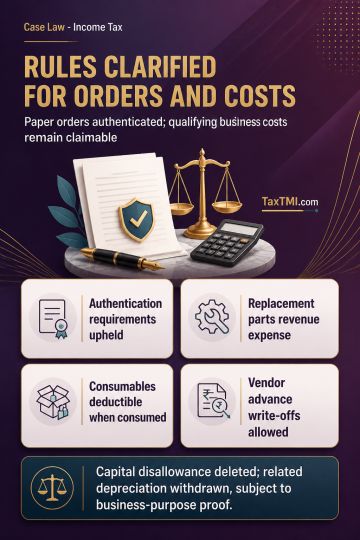
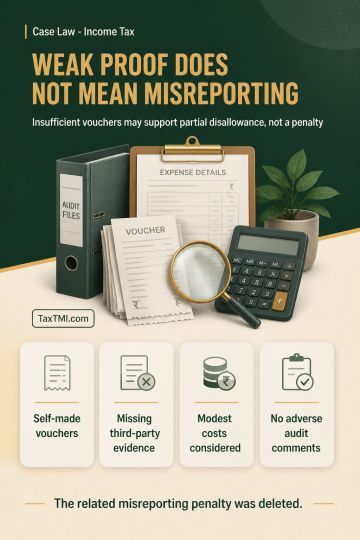
Authentication of paper assessment orders upheld, while qualifying repairs, consumables and vendor advance write-offs remain deductible business claim...
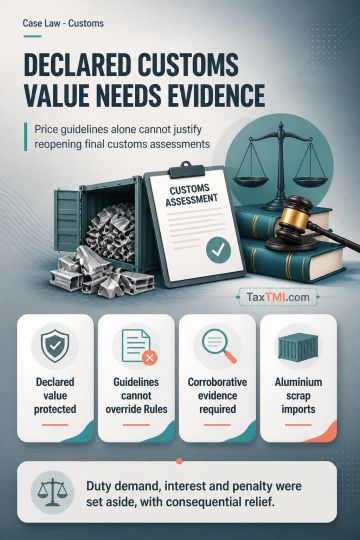
Transaction value cannot be rejected solely on non-statutory valuation guidelines without corroborative evidence supporting reassessment of final cust...
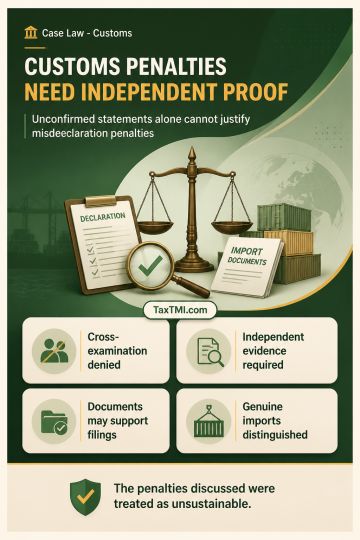
Cross-examination rights and corroborated evidence limit customs penalties for misdeclaration in genuine import transactions involving documented clea...
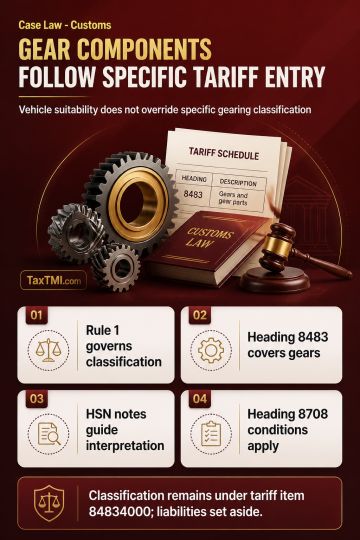
Tariff classification of vehicle gear components follows the specific gearing entry, displacing motor-vehicle parts classification and related liabili...
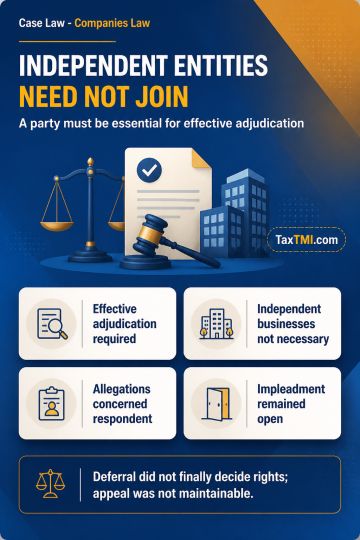
Necessary-party requirements limit impleadment of independent entities, while deferred consideration does not create an appealable adverse determinati...
Page of 4788
Press 'Enter' after typing page number.
421 to 440 of 95749 Results
❮
❯
❯❯
0 / 200
Expand Note
Add to Folder
No Folders have been created
+
Are you sure you want to delete "My most important" ?
The Calcutta High Court considered a case involving the clandestine removal of wire rods and the levy of a penalty under Rule 26 of the Central Excise Rules, 2002. The court noted the lack of specific findings on the confiscable nature of the goods and the failure to follow a previous order. The appellant provided details of brokers and transporters involved. The tribunal found the penalty justified based on various evidence, including computerized records and statements. The appellate authority upheld the penalty, considering the lack of invoice evidence and rejecting a belated retraction. The court referred to the Supreme Court decision on voluntary confessional statements. The tribunal affirmed the findings, distinguishing a previous case. Ultimately, the court found no substantial legal questions, leading to the dismissal of the appeal.
The Calcutta High Court considered a case involving the clandestine removal of wire rods and the levy of a penalty under Rule 26 of the Central Excise Rules, 2002. The court noted the lack of specific findings on the confiscable nature of the goods and the failure to follow a previous order. The appellant provided details of brokers and transporters involved. The tribunal found the penalty justified based on various evidence, including computerized records and statements. The appellate authority upheld the penalty, considering the lack of invoice evidence and rejecting a belated retraction. The court referred to the Supreme Court decision on voluntary confessional statements. The tribunal affirmed the findings, distinguishing a previous case. Ultimately, the court found no substantial legal questions, leading to the dismissal of the appeal.
Note: It is a system-generated summary and is for quick reference only.
 TaxTMI
 of 4788








 Join Channel


 TaxTMI