Specialized Investment Fund distribution now requires dedicated certification, while transitional recognition preserves existing qualified distributor...
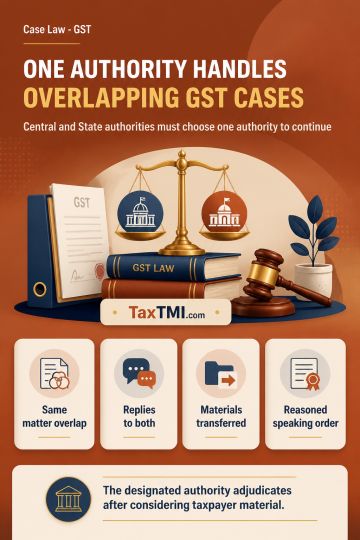
Overlapping GST proceedings require Central and State authorities to designate one competent authority for coordinated adjudication of the same matter...
Composite healthcare supplies retain exemption when patient care is the contract's essential character, despite payment through an implementing agency...
Receipt of immovable property requires actual possession or enjoyment; redevelopment allotments exchanged for tenancy rights fall outside deemed incom...
The ITAT Mumbai considered a case involving a penalty u/s 271(1)(c) for concealment of income or furnishing inaccurate particulars of income. The Tribunal found the notice issued u/s 274 to be defective and emphasized the importance of clear-cut findings on whether there was concealment or inaccurate particulars. The Tribunal held that confusion in recording satisfaction for penalty initiation renders the penalty unsustainable. It rejected the argument that finality of additions made by the AO warrants penalty, citing the principle that incorrect claims do not equate to inaccurate particulars. The Tribunal concluded that rejection of a claim does not automatically lead to penalty imposition. Based on legal tests and higher court decisions, the Tribunal upheld the deletion of the penalty, stating that the decision was neither perverse nor illegal. As a result, the Revenue's appeal was dismissed.
The ITAT Mumbai considered a case involving a penalty u/s 271(1)(c) for concealment of income or furnishing inaccurate particulars of income. The Tribunal found the notice issued u/s 274 to be defective and emphasized the importance of clear-cut findings on whether there was concealment or inaccurate particulars. The Tribunal held that confusion in recording satisfaction for penalty initiation renders the penalty unsustainable. It rejected the argument that finality of additions made by the AO warrants penalty, citing the principle that incorrect claims do not equate to inaccurate particulars. The Tribunal concluded that rejection of a claim does not automatically lead to penalty imposition. Based on legal tests and higher court decisions, the Tribunal upheld the deletion of the penalty, stating that the decision was neither perverse nor illegal. As a result, the Revenue's appeal was dismissed.
Note: It is a system-generated summary and is for quick reference only.
 TaxTMI
 of 4786


















 Join Channel


 TaxTMI
