Tax deduction compliance and payee income recognition govern consultancy disallowance, while no exempt income prevents related expenditure disallowanc...
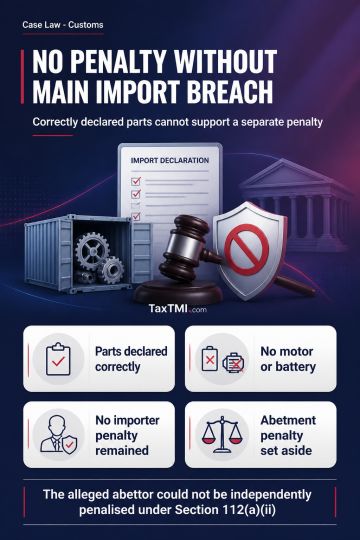
Derivative abetment liability fails when correctly declared imported components establish no underlying improper importation by the principal importer...
Tax exemption for regulatory authority income applies retrospectively, subject to non-commercial activity, unchanged income sources, and return filing...
Page of 4788
Press 'Enter' after typing page number.
361 to 380 of 95752 Results
❮
❯
❯❯
0 / 200
Expand Note
Add to Folder
No Folders have been created
+
Are you sure you want to delete "My most important" ?
The case before CESTAT New Delhi involved fraudulent registration and utilization of duty-free scrips, leading to penalties. The appellant failed to comply with notification requirements for duty exemption, resulting in denial of benefits. The appellant purchased a forged and fraudulent scrip, failing to verify its authenticity as required by Foreign Trade Policy and exemption notifications. The appellant's lack of due diligence in verifying and producing the scrip at clearance led to the imposition of penalties. The principle of caveat emptor was applied, emphasizing the buyer's responsibility to make reasonable inquiries. The imposition of penalties under section 114A was upheld due to the appellant's failure to meet notification requirements and lack of genuine belief. The appeals were dismissed, affirming the penalties and confirming the demand.
The case before CESTAT New Delhi involved fraudulent registration and utilization of duty-free scrips, leading to penalties. The appellant failed to comply with notification requirements for duty exemption, resulting in denial of benefits. The appellant purchased a forged and fraudulent scrip, failing to verify its authenticity as required by Foreign Trade Policy and exemption notifications. The appellant's lack of due diligence in verifying and producing the scrip at clearance led to the imposition of penalties. The principle of caveat emptor was applied, emphasizing the buyer's responsibility to make reasonable inquiries. The imposition of penalties under section 114A was upheld due to the appellant's failure to meet notification requirements and lack of genuine belief. The appeals were dismissed, affirming the penalties and confirming the demand.
Note: It is a system-generated summary and is for quick reference only.
 TaxTMI
 of 4788


















 Join Channel


 TaxTMI
