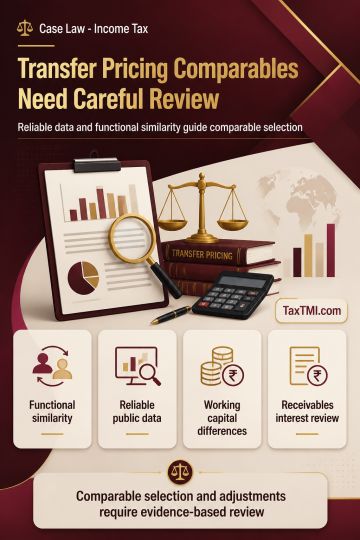
Transfer pricing comparability requires functional alignment, reliable financial data, and careful review of working capital and receivables adjustmen...
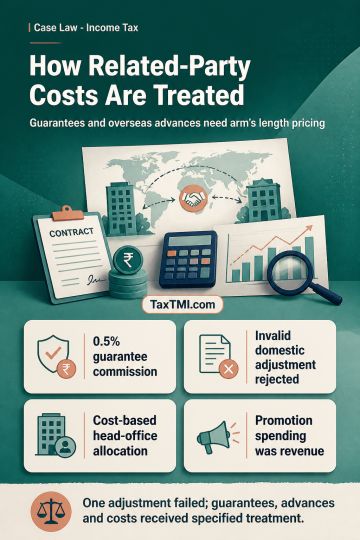
Transfer pricing rules require benchmarking corporate guarantees and associated-enterprise advances, while invalid domestic-transaction adjustments ca...
Prospective sugar export prohibition required registered letters of credit; private contracts and export quotas created no enforceable continuation ri...
Retroactive interim-moratorium exclusion permits protective asset disclosure and preservation measures against personal guarantors pending arbitration...
The ITAT Ahmedabad addressed the jurisdiction of the AO over a corporate assessee with income exceeding Rs. 30 Lakhs in metro cities. The tribunal confirmed that income, as per Section 2(24) of the Income Tax Act, includes losses. Referring to legal precedents, it was established that income encompasses losses. Therefore, the CBDT Instruction on jurisdiction applied to cases of both income and losses over Rs. 30 Lakhs. The DCIT's issuance of notice u/s 143(2) was deemed appropriate. The rejection of the assessee's books of account and estimation of profit at 10% of total receipts were upheld. The assessee's failure to provide proper accounts and evidence led to the rejection. The AO's estimation of income at 10% was considered reasonable, given the nature of the assessee's work and the prescribed rate under the Act. The tribunal declined to interfere with the AO's income estimation.
The ITAT Ahmedabad addressed the jurisdiction of the AO over a corporate assessee with income exceeding Rs. 30 Lakhs in metro cities. The tribunal confirmed that income, as per Section 2(24) of the Income Tax Act, includes losses. Referring to legal precedents, it was established that income encompasses losses. Therefore, the CBDT Instruction on jurisdiction applied to cases of both income and losses over Rs. 30 Lakhs. The DCIT's issuance of notice u/s 143(2) was deemed appropriate. The rejection of the assessee's books of account and estimation of profit at 10% of total receipts were upheld. The assessee's failure to provide proper accounts and evidence led to the rejection. The AO's estimation of income at 10% was considered reasonable, given the nature of the assessee's work and the prescribed rate under the Act. The tribunal declined to interfere with the AO's income estimation.
Note: It is a system-generated summary and is for quick reference only.
 TaxTMI
 of 4782
















 Join Channel


 TaxTMI