Minimum alternate tax exclusions for pre-amendment banking companies and expatriate Indian branch salaries remain outside head office expenditure limi...
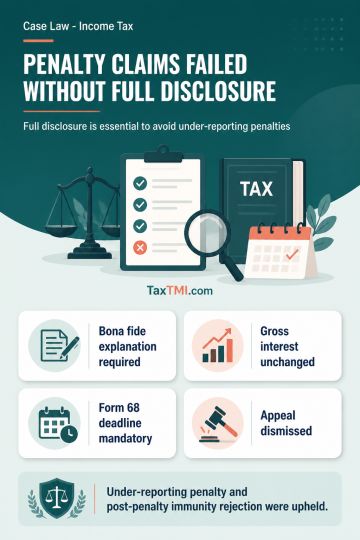
Bona fide disclosure requirements govern under-reporting penalties, and post-penalty immunity applications cannot secure available statutory protectio...
Certificate-of-origin verification procedure governs preferential customs benefits; denial without retroactive verification was set aside with consequ...
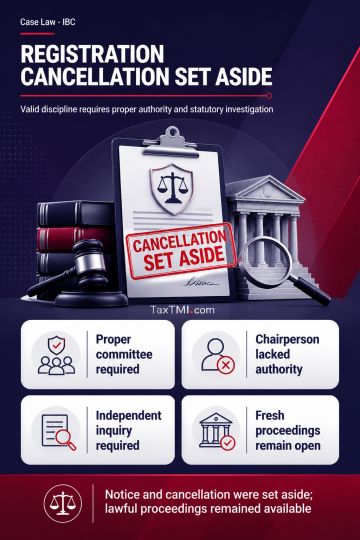
Disciplinary Committee jurisdiction and mandatory investigation requirements invalidated cancellation of an insolvency professional's registration and...
The ITAT Ahmedabad addressed the jurisdiction of the AO over a corporate assessee with income exceeding Rs. 30 Lakhs in metro cities. The tribunal confirmed that income, as per Section 2(24) of the Income Tax Act, includes losses. Referring to legal precedents, it was established that income encompasses losses. Therefore, the CBDT Instruction on jurisdiction applied to cases of both income and losses over Rs. 30 Lakhs. The DCIT's issuance of notice u/s 143(2) was deemed appropriate. The rejection of the assessee's books of account and estimation of profit at 10% of total receipts were upheld. The assessee's failure to provide proper accounts and evidence led to the rejection. The AO's estimation of income at 10% was considered reasonable, given the nature of the assessee's work and the prescribed rate under the Act. The tribunal declined to interfere with the AO's income estimation.
The ITAT Ahmedabad addressed the jurisdiction of the AO over a corporate assessee with income exceeding Rs. 30 Lakhs in metro cities. The tribunal confirmed that income, as per Section 2(24) of the Income Tax Act, includes losses. Referring to legal precedents, it was established that income encompasses losses. Therefore, the CBDT Instruction on jurisdiction applied to cases of both income and losses over Rs. 30 Lakhs. The DCIT's issuance of notice u/s 143(2) was deemed appropriate. The rejection of the assessee's books of account and estimation of profit at 10% of total receipts were upheld. The assessee's failure to provide proper accounts and evidence led to the rejection. The AO's estimation of income at 10% was considered reasonable, given the nature of the assessee's work and the prescribed rate under the Act. The tribunal declined to interfere with the AO's income estimation.
Note: It is a system-generated summary and is for quick reference only.
 TaxTMI
 of 4801











 Join Channel


 TaxTMI