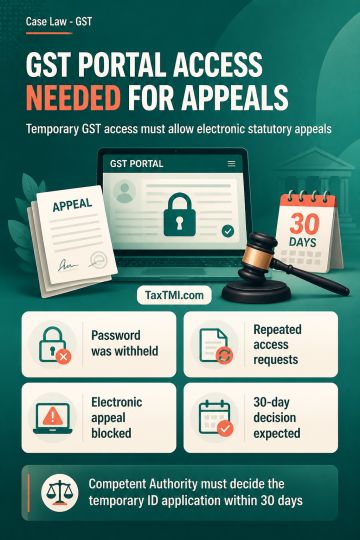
Necessary-party requirements limit impleadment of independent entities, while deferred consideration does not create an appealable adverse determinati...
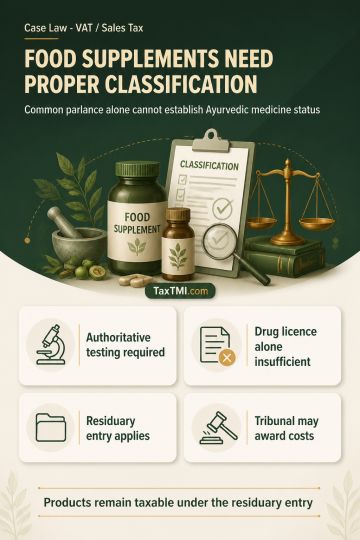
Food supplement classification requires common parlance and authoritative tests, preventing treatment as proprietary Ayurvedic medicines without suppo...
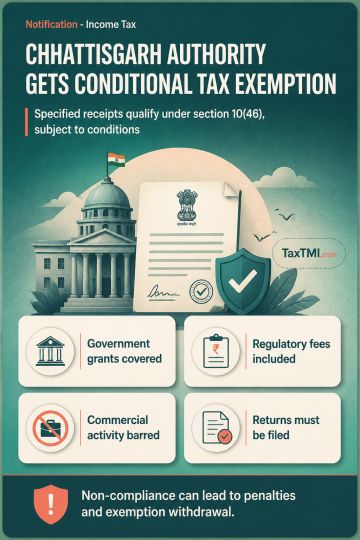
Specified regulatory authority income receives conditional tax exemption, subject to non-commercial activity, unchanged income character, and return f...
Tax exemption for regulatory authority income applies retrospectively, subject to non-commercial activity, unchanged income sources, and return-filing...
The ITAT Ahmedabad addressed the jurisdiction of the AO over a corporate assessee with income exceeding Rs. 30 Lakhs in metro cities. The tribunal confirmed that income, as per Section 2(24) of the Income Tax Act, includes losses. Referring to legal precedents, it was established that income encompasses losses. Therefore, the CBDT Instruction on jurisdiction applied to cases of both income and losses over Rs. 30 Lakhs. The DCIT's issuance of notice u/s 143(2) was deemed appropriate. The rejection of the assessee's books of account and estimation of profit at 10% of total receipts were upheld. The assessee's failure to provide proper accounts and evidence led to the rejection. The AO's estimation of income at 10% was considered reasonable, given the nature of the assessee's work and the prescribed rate under the Act. The tribunal declined to interfere with the AO's income estimation.
The ITAT Ahmedabad addressed the jurisdiction of the AO over a corporate assessee with income exceeding Rs. 30 Lakhs in metro cities. The tribunal confirmed that income, as per Section 2(24) of the Income Tax Act, includes losses. Referring to legal precedents, it was established that income encompasses losses. Therefore, the CBDT Instruction on jurisdiction applied to cases of both income and losses over Rs. 30 Lakhs. The DCIT's issuance of notice u/s 143(2) was deemed appropriate. The rejection of the assessee's books of account and estimation of profit at 10% of total receipts were upheld. The assessee's failure to provide proper accounts and evidence led to the rejection. The AO's estimation of income at 10% was considered reasonable, given the nature of the assessee's work and the prescribed rate under the Act. The tribunal declined to interfere with the AO's income estimation.
Note: It is a system-generated summary and is for quick reference only.
 TaxTMI
 of 4786











 Join Channel


 TaxTMI