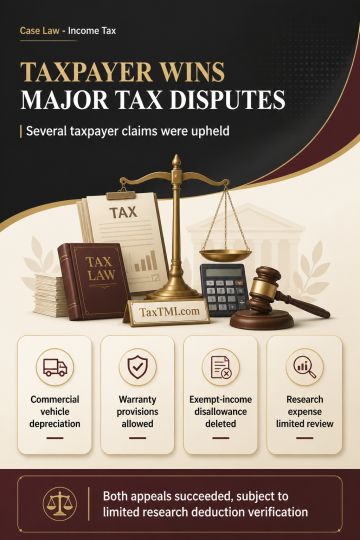
Commercial vehicle depreciation, scientifically determined warranty provisions and exempt-income disallowances were resolved in favour of the taxpayer...
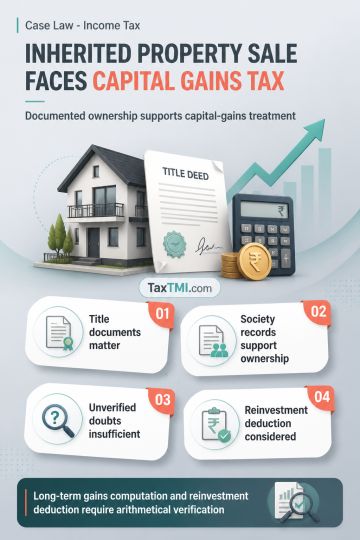
Inherited property sale proceeds require capital-gains treatment where ownership is supported by evidence, not suspicion or unverified signature doubt...
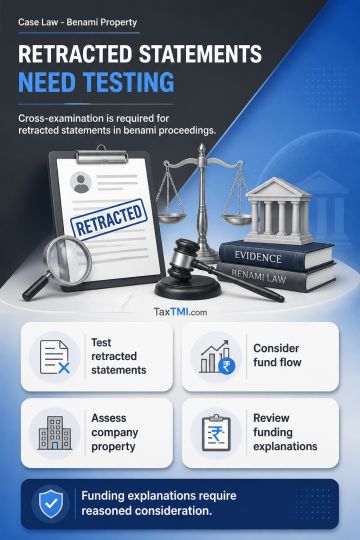
Cross-examination of retracted statements is essential where foundational evidence supports a benami allegation and documented funding explanations re...
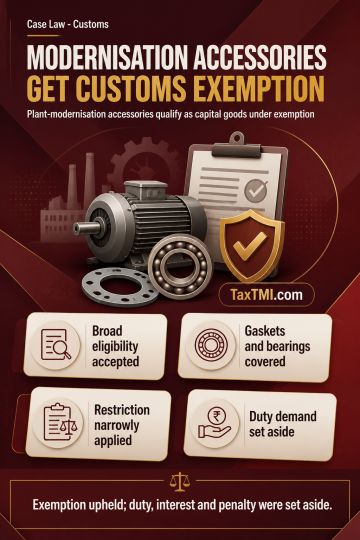
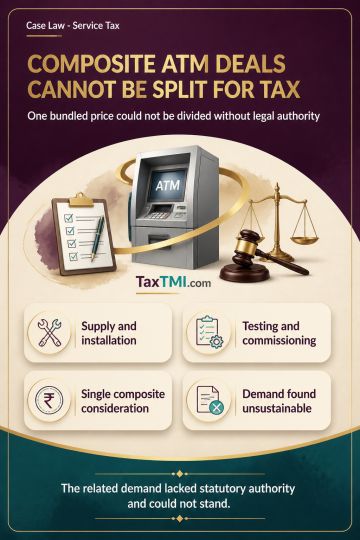
Capital-goods exemption covers plant-modernisation accessories, while the import restriction applies only to earlier capital-goods components and spar...
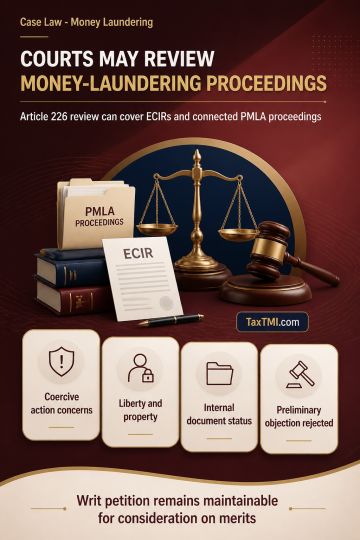
Constitutional judicial review permits challenges to ECIRs and connected money-laundering proceedings where coercive action affects fundamental intere...
Entities generating over 100 metric tonnes of used oil annually must comply with the Hazardous and Other Wastes (Management and Transboundary Movement) Second Amendment Rules, 2023. Key terms include "business," "collection point," "collection agent," "energy recovery," and "environmentally sound management." Producers, collection agents, recyclers, and used oil importers must register with the Central Pollution Control Board (CPCB) on the portal. Extended Producer Responsibility (EPR) mandates recycling targets, with penalties for non-compliance. EPR certificates are issued to recyclers and can be traded. The CPCB oversees compliance, supported by state bodies and a Steering Committee. Environmental compensation and prosecution apply for violations.
Entities generating over 100 metric tonnes of used oil annually must comply with the Hazardous and Other Wastes (Management and Transboundary Movement) Second Amendment Rules, 2023. Key terms include "business," "collection point," "collection agent," "energy recovery," and "environmentally sound management." Producers, collection agents, recyclers, and used oil importers must register with the Central Pollution Control Board (CPCB) on the portal. Extended Producer Responsibility (EPR) mandates recycling targets, with penalties for non-compliance. EPR certificates are issued to recyclers and can be traded. The CPCB oversees compliance, supported by state bodies and a Steering Committee. Environmental compensation and prosecution apply for violations.
Note: It is a system-generated summary and is for quick reference only.
 TaxTMI
 of 4782




 Join Channel


 TaxTMI
