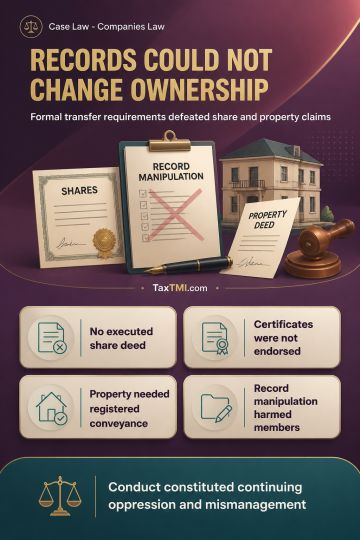
Statutory transfer formalities invalidated alleged share and property transfers, while retrospective record manipulation constituted oppression and mi...
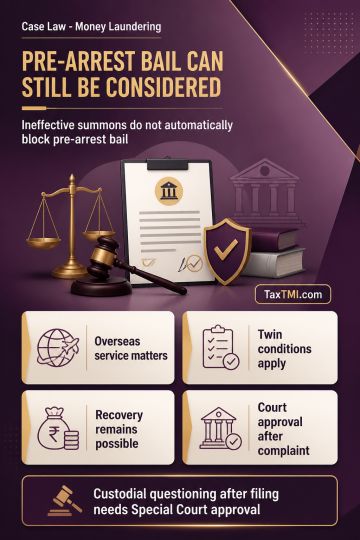
Provisional attachment of laundered funds and equivalent-value property sustained, with statutory protection limited to pension, gratuity and providen...
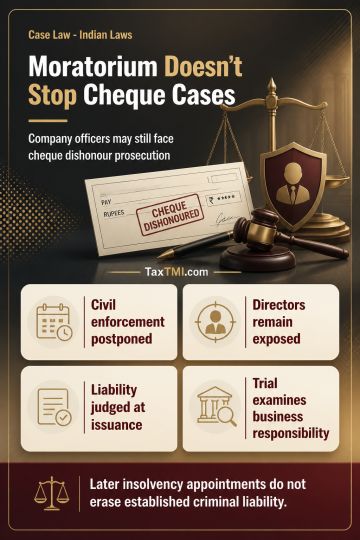
Insolvency moratorium does not shield company officers from cheque dishonour prosecution for liability arising before corporate insolvency proceedings...
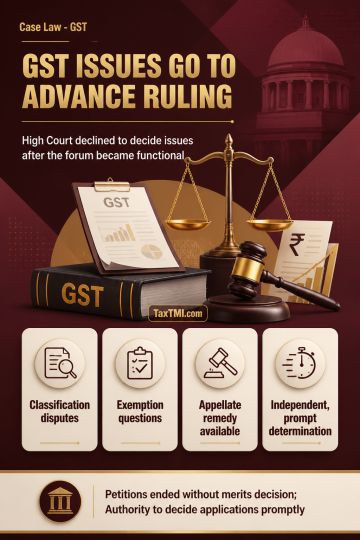
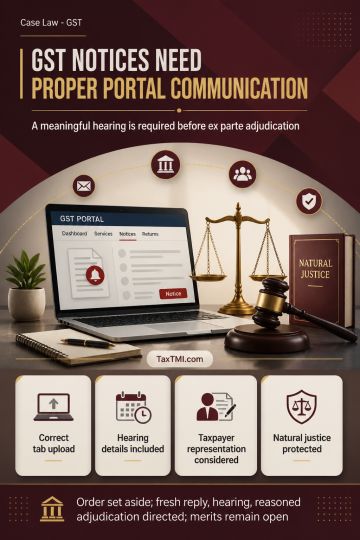
Advance-ruling mechanism governs pending GST classification, exemption and taxability disputes, limiting writ review once the specialised forum functi...
Page of 4788
Press 'Enter' after typing page number.
581 to 600 of 95752 Results
❮
❯
❯❯
0 / 200
Expand Note
Add to Folder
No Folders have been created
+
Are you sure you want to delete "My most important" ?
Entities generating over 100 metric tonnes of used oil annually must comply with the Hazardous and Other Wastes (Management and Transboundary Movement) Second Amendment Rules, 2023. Key terms include "business," "collection point," "collection agent," "energy recovery," and "environmentally sound management." Producers, collection agents, recyclers, and used oil importers must register with the Central Pollution Control Board (CPCB) on the portal. Extended Producer Responsibility (EPR) mandates recycling targets, with penalties for non-compliance. EPR certificates are issued to recyclers and can be traded. The CPCB oversees compliance, supported by state bodies and a Steering Committee. Environmental compensation and prosecution apply for violations.
Entities generating over 100 metric tonnes of used oil annually must comply with the Hazardous and Other Wastes (Management and Transboundary Movement) Second Amendment Rules, 2023. Key terms include "business," "collection point," "collection agent," "energy recovery," and "environmentally sound management." Producers, collection agents, recyclers, and used oil importers must register with the Central Pollution Control Board (CPCB) on the portal. Extended Producer Responsibility (EPR) mandates recycling targets, with penalties for non-compliance. EPR certificates are issued to recyclers and can be traded. The CPCB oversees compliance, supported by state bodies and a Steering Committee. Environmental compensation and prosecution apply for violations.
Note: It is a system-generated summary and is for quick reference only.
 TaxTMI
 of 4788







 Join Channel


 TaxTMI