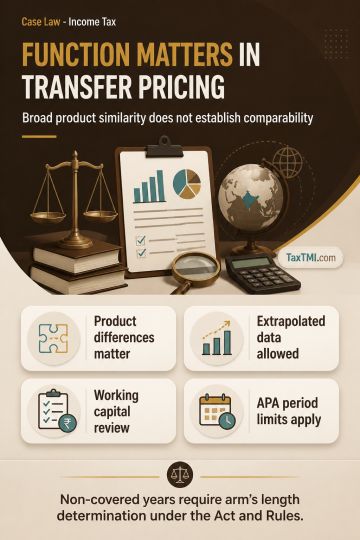
Transfer pricing comparability requires functional alignment and permits working capital adjustment, while APA margins cannot govern non-covered years...
Treaty benefit, goodwill depreciation and hedging costs: export commission disallowed, while key business deductions and depreciation claims succeeded...
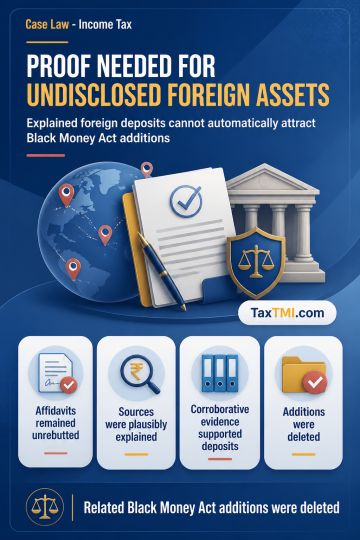
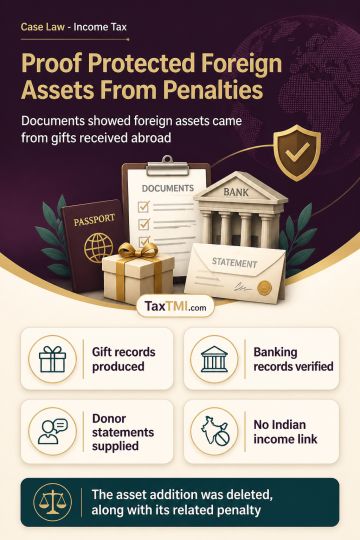
Undisclosed foreign asset classification requires an unexplained source; unrebutted affidavits and corroborative evidence defeated the Black Money Act...
The ITAT Delhi, in an assessment u/s 153A, addressed the addition u/s 68 concerning income from undisclosed sources. The appellant, a partner in M/s. RNB Leasing and Financial Services, had filed a return for the assessment year. Following search and seizure operations, a key to an Indian Overseas Bank locker was found in the names of Lalita Bajaj and the appellant. Despite no incriminating evidence found during the search of the locker, the AO made additions u/s 68 in a similar case involving share allotment. However, in the present case, the appellant did not receive share application money or premium but was involved in the sale of investments/shares to other entities. The Department did not dispute the investment in shares during the earlier period. The ITAT allowed the appellant's grounds on merits, distinguishing the case from previous rulings.
The ITAT Delhi, in an assessment u/s 153A, addressed the addition u/s 68 concerning income from undisclosed sources. The appellant, a partner in M/s. RNB Leasing and Financial Services, had filed a return for the assessment year. Following search and seizure operations, a key to an Indian Overseas Bank locker was found in the names of Lalita Bajaj and the appellant. Despite no incriminating evidence found during the search of the locker, the AO made additions u/s 68 in a similar case involving share allotment. However, in the present case, the appellant did not receive share application money or premium but was involved in the sale of investments/shares to other entities. The Department did not dispute the investment in shares during the earlier period. The ITAT allowed the appellant's grounds on merits, distinguishing the case from previous rulings.
Note: It is a system-generated summary and is for quick reference only.
 TaxTMI
 of 4800











 Join Channel


 TaxTMI
