Necessary-party requirements limit impleadment of independent entities, while deferred consideration does not create an appealable adverse determinati...
Food supplement classification requires common parlance and authoritative tests, preventing treatment as proprietary Ayurvedic medicines without suppo...
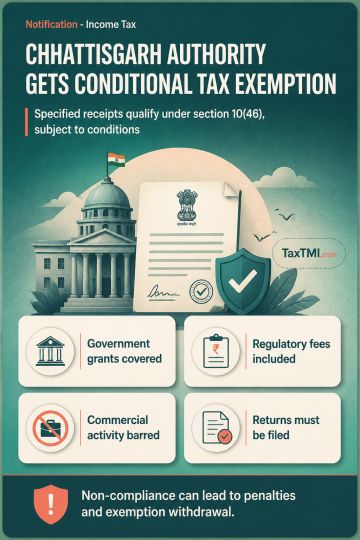
Specified regulatory authority income receives conditional tax exemption, subject to non-commercial activity, unchanged income character, and return f...
Tax exemption for regulatory authority income applies retrospectively, subject to non-commercial activity, unchanged income sources, and return-filing...
Input tax credit conditions remain constitutionally valid, with eligible recipient claims considered under GST circulars and retrospective filing dead...
The case before the Calcutta High Court involved the classification of a company for taxation purposes. The court determined that the appellant company did not qualify as a domestic company but fell under the category of "a company other than a domestic company." The court relied on the definitions provided in the Income Tax Act, 1961 to make this classification. The court also addressed the issue of taxation rates, highlighting the distinction between domestic and foreign companies. The court found that the appellant was liable to be taxed at the rate applicable to a company other than a domestic company. Additionally, the court analyzed the relationship between the domestic tax laws and the Double Taxation Avoidance Agreement (DTAA) with the Netherlands. It concluded that there was no conflict between the Explanation to Section 90 of the Income Tax Act, 1961 and Article 24(2) of the DTAA.
The case before the Calcutta High Court involved the classification of a company for taxation purposes. The court determined that the appellant company did not qualify as a domestic company but fell under the category of "a company other than a domestic company." The court relied on the definitions provided in the Income Tax Act, 1961 to make this classification. The court also addressed the issue of taxation rates, highlighting the distinction between domestic and foreign companies. The court found that the appellant was liable to be taxed at the rate applicable to a company other than a domestic company. Additionally, the court analyzed the relationship between the domestic tax laws and the Double Taxation Avoidance Agreement (DTAA) with the Netherlands. It concluded that there was no conflict between the Explanation to Section 90 of the Income Tax Act, 1961 and Article 24(2) of the DTAA.
Note: It is a system-generated summary and is for quick reference only.
 TaxTMI
 of 4784





















 Join Channel


 TaxTMI

