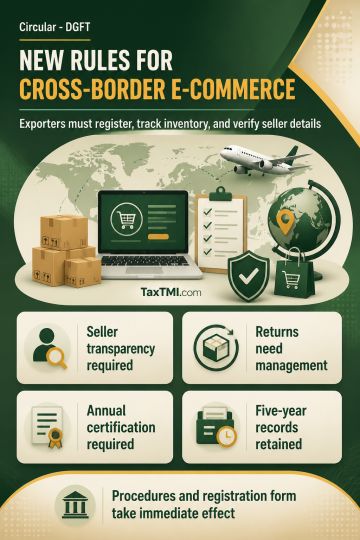
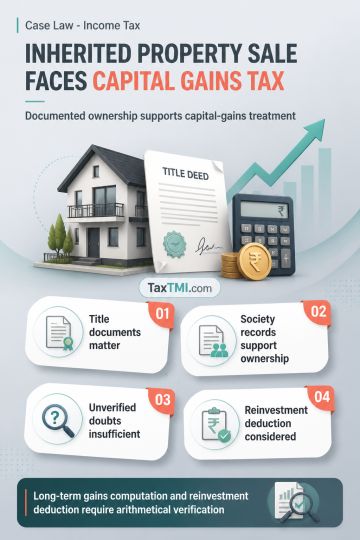
Inherited property sale proceeds require capital-gains treatment where ownership is supported by evidence, not suspicion or unverified signature doubt...
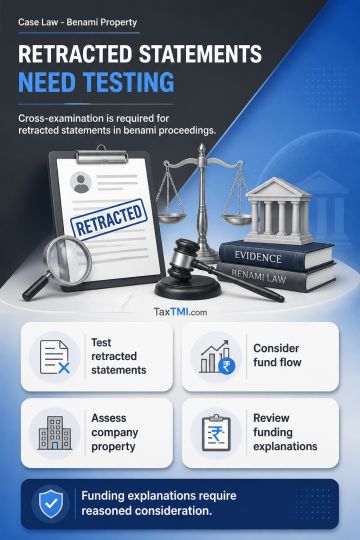
Cross-examination of retracted statements is essential where foundational evidence supports a benami allegation and documented funding explanations re...
Capital-goods exemption covers plant-modernisation accessories, while the import restriction applies only to earlier capital-goods components and spar...
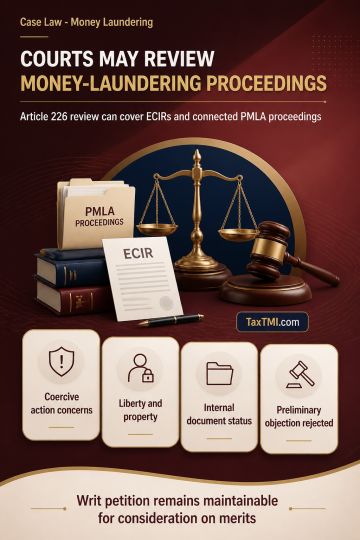
Constitutional judicial review permits challenges to ECIRs and connected money-laundering proceedings where coercive action affects fundamental intere...
The case involved the classification of Diagnostic Kits as "drugs" under the Drugs and Cosmetics Act, 1940. The court held that devices used for diagnosis fall under the definition of "drug" only if specified by the Central Government in the Official Gazette. Diagnostic Kits were deemed more akin to "devices" than "medicines" and would be considered as "drugs" under sub-section (iv) of Section 3 (b) if notified by the Central Government. The court noted the absence of evidence showing Diagnostic Kits are considered "medicines" or "drugs" by medical practitioners. If the Kits are notified as "drugs," they would be charged at 4% under Entry 48 of Schedule C; otherwise, they would fall under Entry 165 of Schedule D and be taxed at 12.5%. The court disposed of the petition accordingly.
The case involved the classification of Diagnostic Kits as "drugs" under the Drugs and Cosmetics Act, 1940. The court held that devices used for diagnosis fall under the definition of "drug" only if specified by the Central Government in the Official Gazette. Diagnostic Kits were deemed more akin to "devices" than "medicines" and would be considered as "drugs" under sub-section (iv) of Section 3 (b) if notified by the Central Government. The court noted the absence of evidence showing Diagnostic Kits are considered "medicines" or "drugs" by medical practitioners. If the Kits are notified as "drugs," they would be charged at 4% under Entry 48 of Schedule C; otherwise, they would fall under Entry 165 of Schedule D and be taxed at 12.5%. The court disposed of the petition accordingly.
Note: It is a system-generated summary and is for quick reference only.
 TaxTMI
 of 4786








 Join Channel


 TaxTMI