Prolonged sterilisation of development rights supports capital-gains treatment, while business-income disallowances cannot govern capital-gains comput...
Additional evidence in transfer pricing dispute leads to fresh examination, while tax deductions, TDS credit, fee and refund interest require verifica...
Category II AIF pass-through taxation preserves non-business income character; investment receipts cannot be reclassified without applying recognised ...
Mutual fund maturity rules require proper rollover, redemption, disclosure, and due diligence; investor gains cannot excuse regulatory breaches or pen...
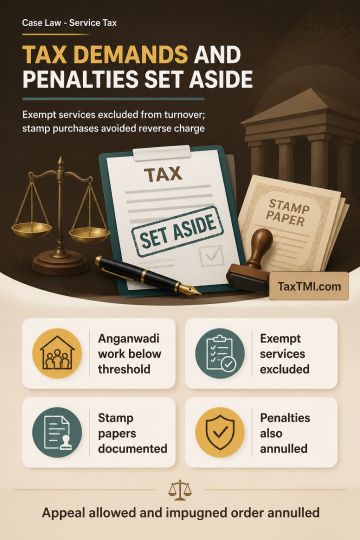
Threshold exemption excludes exempt services, while stamp-paper purchases avoid reverse charge; consequential service tax penalties were also set asid...
The case involved the classification of Diagnostic Kits as "drugs" under the Drugs and Cosmetics Act, 1940. The court held that devices used for diagnosis fall under the definition of "drug" only if specified by the Central Government in the Official Gazette. Diagnostic Kits were deemed more akin to "devices" than "medicines" and would be considered as "drugs" under sub-section (iv) of Section 3 (b) if notified by the Central Government. The court noted the absence of evidence showing Diagnostic Kits are considered "medicines" or "drugs" by medical practitioners. If the Kits are notified as "drugs," they would be charged at 4% under Entry 48 of Schedule C; otherwise, they would fall under Entry 165 of Schedule D and be taxed at 12.5%. The court disposed of the petition accordingly.
The case involved the classification of Diagnostic Kits as "drugs" under the Drugs and Cosmetics Act, 1940. The court held that devices used for diagnosis fall under the definition of "drug" only if specified by the Central Government in the Official Gazette. Diagnostic Kits were deemed more akin to "devices" than "medicines" and would be considered as "drugs" under sub-section (iv) of Section 3 (b) if notified by the Central Government. The court noted the absence of evidence showing Diagnostic Kits are considered "medicines" or "drugs" by medical practitioners. If the Kits are notified as "drugs," they would be charged at 4% under Entry 48 of Schedule C; otherwise, they would fall under Entry 165 of Schedule D and be taxed at 12.5%. The court disposed of the petition accordingly.
Note: It is a system-generated summary and is for quick reference only.
 TaxTMI
 of 4805
















 Join Channel


 TaxTMI
