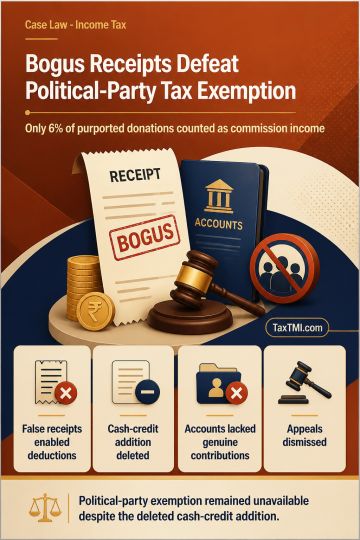
Bogus donation receipts justified commission income assessment and defeated political-party tax exemption for inaccurate accounts and reporting failur...
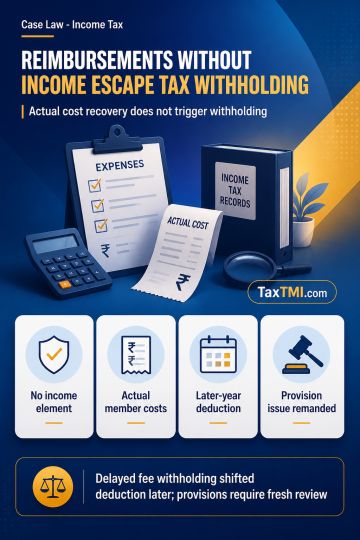
Pure reimbursement without income element escapes tax withholding, while delayed withholding and unsupported provisions face deferred or renewed scrut...
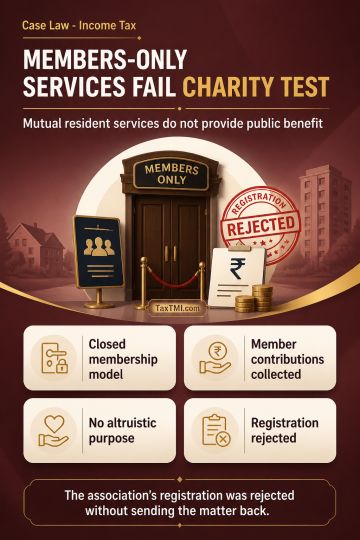
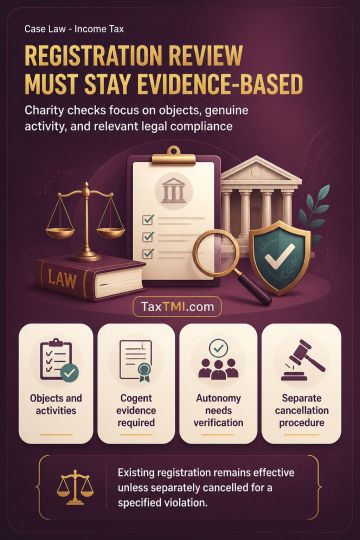
Public benefit requirement defeats charitable registration where residents' association services are reciprocal, member-only facilities governed by mu...
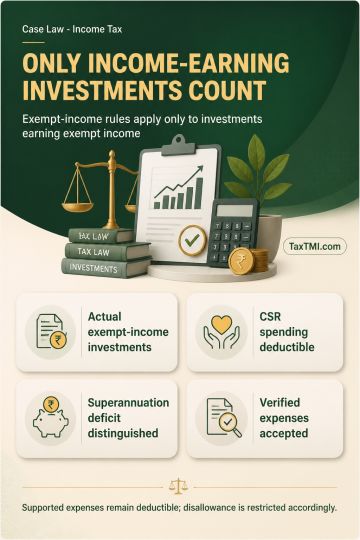
Exempt-income expenditure disallowance is confined to investments that actually generated exempt income, while supported business expenses remain dedu...
The case involved the classification of Diagnostic Kits as "drugs" under the Drugs and Cosmetics Act, 1940. The court held that devices used for diagnosis fall under the definition of "drug" only if specified by the Central Government in the Official Gazette. Diagnostic Kits were deemed more akin to "devices" than "medicines" and would be considered as "drugs" under sub-section (iv) of Section 3 (b) if notified by the Central Government. The court noted the absence of evidence showing Diagnostic Kits are considered "medicines" or "drugs" by medical practitioners. If the Kits are notified as "drugs," they would be charged at 4% under Entry 48 of Schedule C; otherwise, they would fall under Entry 165 of Schedule D and be taxed at 12.5%. The court disposed of the petition accordingly.
The case involved the classification of Diagnostic Kits as "drugs" under the Drugs and Cosmetics Act, 1940. The court held that devices used for diagnosis fall under the definition of "drug" only if specified by the Central Government in the Official Gazette. Diagnostic Kits were deemed more akin to "devices" than "medicines" and would be considered as "drugs" under sub-section (iv) of Section 3 (b) if notified by the Central Government. The court noted the absence of evidence showing Diagnostic Kits are considered "medicines" or "drugs" by medical practitioners. If the Kits are notified as "drugs," they would be charged at 4% under Entry 48 of Schedule C; otherwise, they would fall under Entry 165 of Schedule D and be taxed at 12.5%. The court disposed of the petition accordingly.
Note: It is a system-generated summary and is for quick reference only.
 TaxTMI
 of 4792



 Join Channel


 TaxTMI